
Last updated November 4, 2026
 Wrought iron
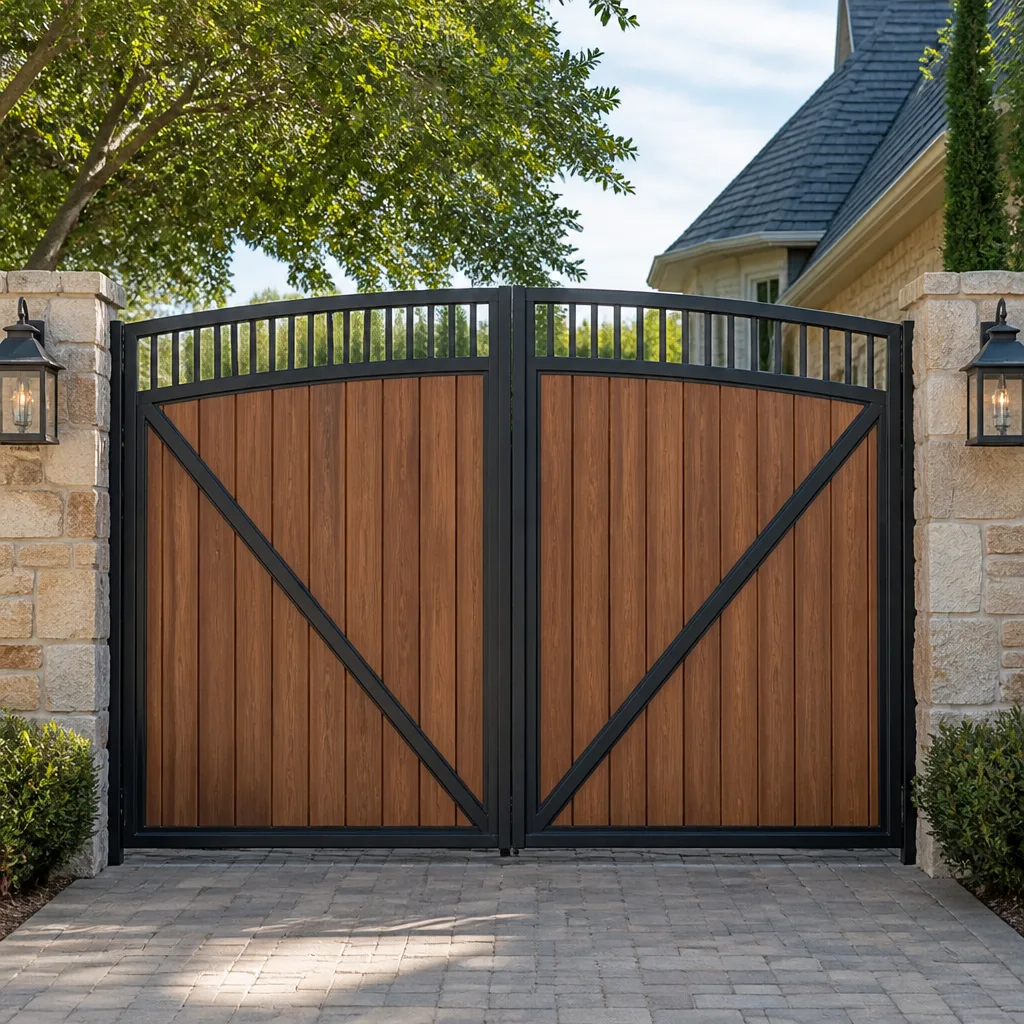 Wood & steel frame
 Farm & ranch
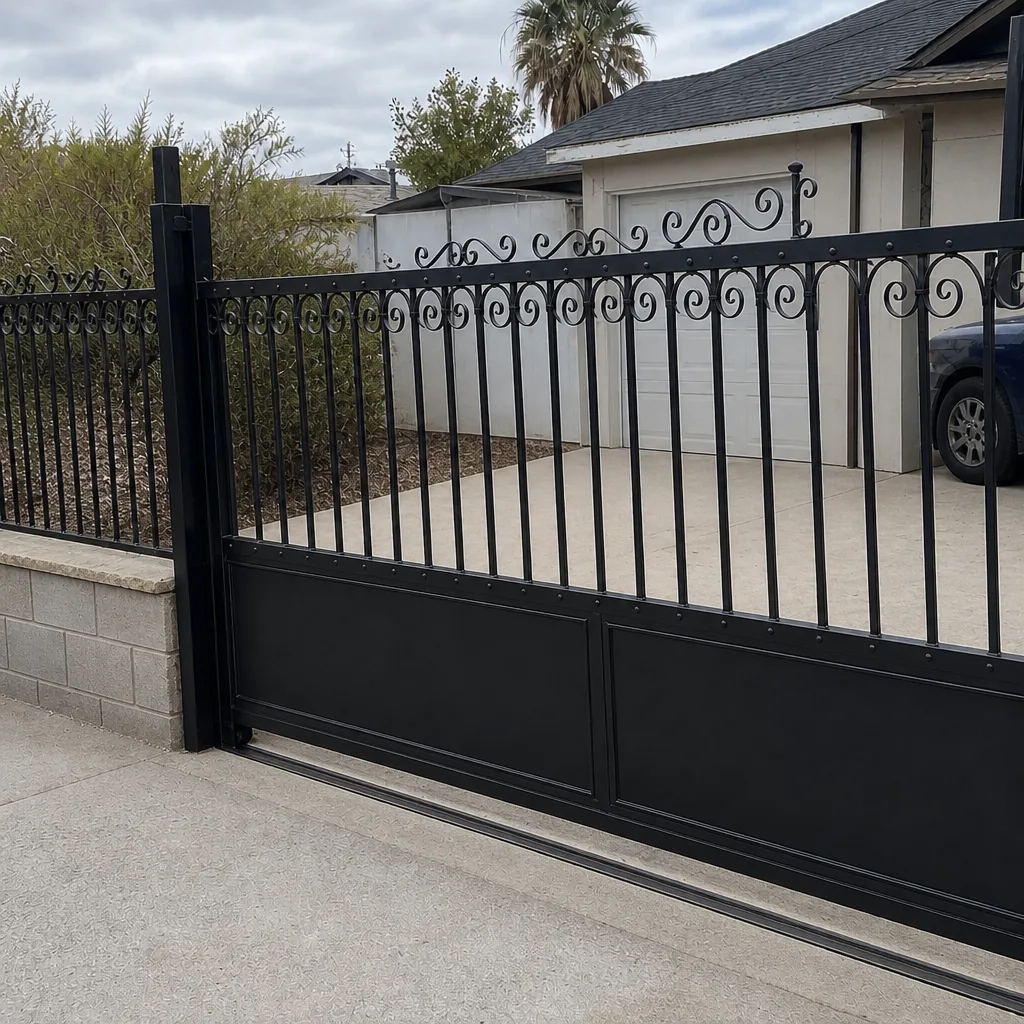
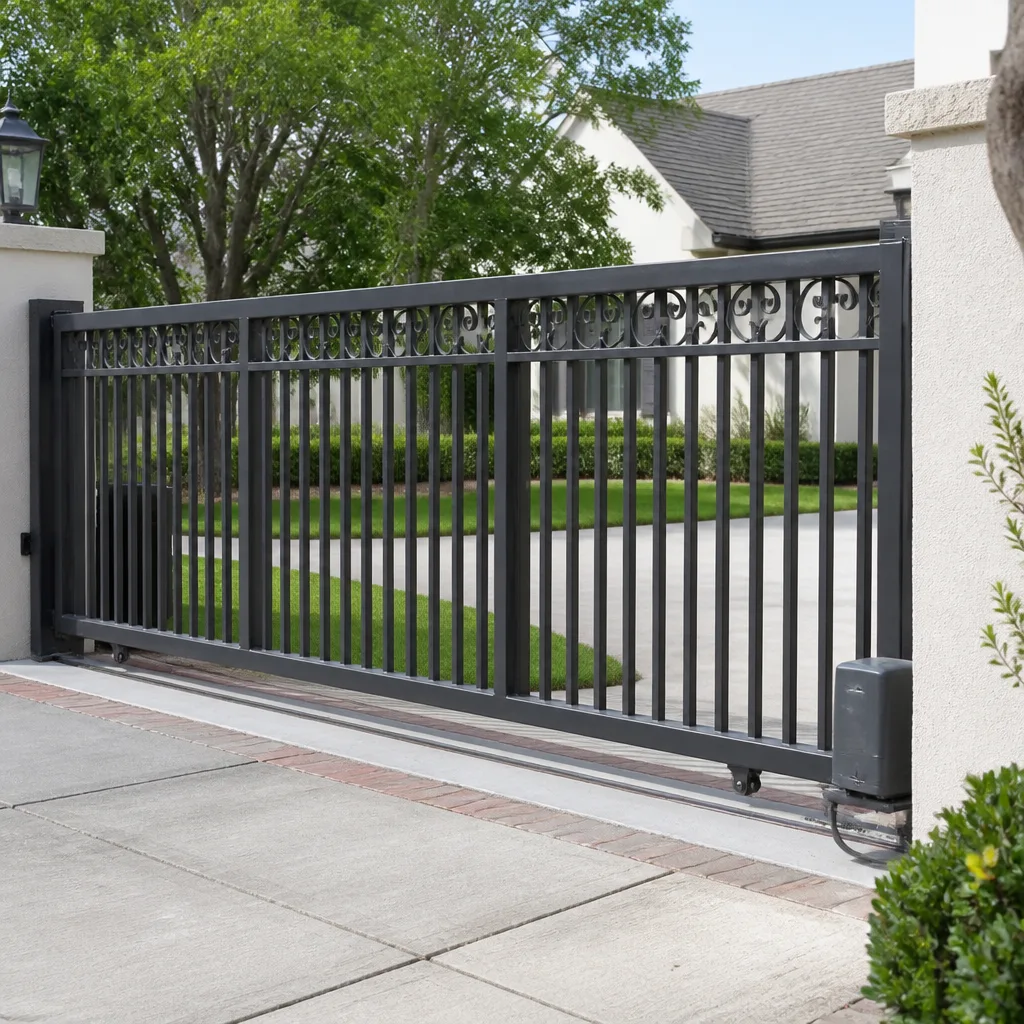 Sliding driveway gates
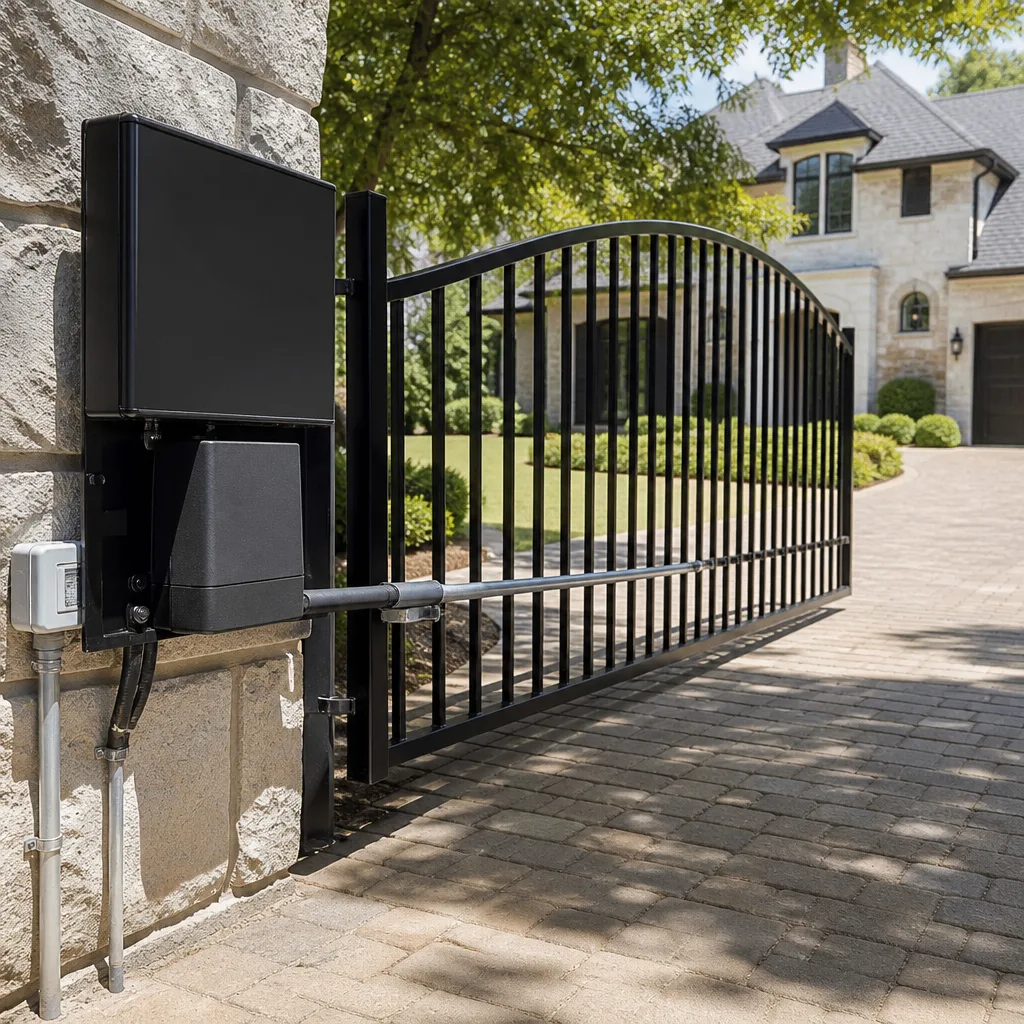 LiftMaster operators
Free on-site gate assessment - hinges, posts, and your LiftMaster or Nice gate operator checked before anything is quoted
The assessment is free and the quote is the invoice.
Get your free estimateGate Repair Permits, Codes & Inspections in Perris, CA: What You Need to Know
Most Perris homeowners assume a gate repair never needs a permit. That assumption is wrong often enough to be expensive. Replacing a gate operator, the motor that moves an automated gate, can legally require a permit under California’s UL 325 safety standards, and skipping it can void your homeowner’s insurance if someone gets hurt. This guide walks you through exactly when Perris and Riverside County want paperwork, what an inspector actually checks, and how unpermitted work follows you into a property sale.
Styles & brands we work with
- Wrought iron
- Wood & steel frame
- Farm & ranch
- Sliding driveway gates
- LiftMaster operators
Quick Answer
Most mechanical gate repairs in Perris, like replacing hinges, welding a cracked post, or straightening a bent track, are exempt from permits. But replacing or significantly modifying an automated gate operator, adding new electrical wiring, or installing a new gate system can require a permit through the City of Perris Building Division or Riverside County. The permit ensures the operator meets California’s UL 325 entrapment protection requirements, which apply to every automated residential gate in the state.
Table of Contents
- What Perris Homeowners Misunderstand About Gate Permits
- When the City of Perris and Riverside County Require a Permit
- When No Permit Is Needed: Exempt Repairs
- UL 325 in Plain Language: What It Actually Requires
- What a Perris Gate Inspection Actually Checks
- How Unpermitted Gate Work Affects Insurance and Property Disclosures
- Who Pulls the Permit: Contractor vs. Homeowner Responsibility
- Common Mistakes to Avoid
- When to Call a Professional
- Frequently Asked Questions
- The Bottom Line
What Perris Homeowners Misunderstand About Gate Permits
California amended its automated gate safety code in 2016, and a majority of residential gate operators installed before that date are technically non-compliant. That means if your gate injures someone, you may be liable even if the gate was professionally installed at the time. The law does not grandfather older systems. Compliance is judged by the standard in effect now, not the standard in effect when the operator went in.
In Perris, this matters because the city has grown fast. Riverside County permitted thousands of homes during the building booms of the 2000s and 2010s, many with automated driveway gates as a selling feature. Those systems are now 10 to 20 years old. Operators age, safety edges crack, photo eyes drift out of alignment. An older LiftMaster or Mighty Mule operator that worked fine for a decade may not meet the 2016 entrapment protection revisions, and the homeowner is the one who carries that liability, not the original installer.
The good news is that the requirements are not complicated once you understand them. Most of what the code asks for is the same checklist an experienced gate technician already follows. The difficulty for homeowners is knowing which repairs trigger the requirement and which ones don’t. That is what this guide sorts out.
When the City of Perris and Riverside County Require a Permit
The City of Perris operates its own Building and Safety Division and issues its own permits, adopting the California Building Code with local amendments. Riverside County issues permits for unincorporated areas outside city limits. If you live within Perris city boundaries, you go through Perris. If you live in an unincorporated pocket like parts of Mead Valley or areas along the 215 corridor, you go through the county. Most automated gate work that touches electrical wiring or replaces an operator falls under the category of an electrical permit or a combined building and electrical permit.
Here is the practical breakdown of what typically triggers a permit in Perris:
- Replacing an automated gate operator. Swapping a failed FAAC or DoorKing operator for a new one is treated as new equipment installation, not a simple repair, because the new operator has its own electrical connection and safety controls.
- Adding or relocating electrical wiring. Running new conduit, adding a junction box, or extending a circuit to power a gate operator requires an electrical permit.
- Installing a new automated gate system. A complete new installation, whether it’s a slide gate on a commercial property or a swing gate at a single-family home, requires permits for the gate, the operator, and the electrical work.
- Converting a manual gate to an automated gate. Adding an operator like a Ghost Controls or Mighty Mule kit to a gate that was previously hand-operated changes the gate’s safety profile and triggers the permit requirement.
- Structural changes to the gate or piers. Rebuilding a sagging gate frame, replacing the posts, or altering the track layout can require a building permit if the work is beyond routine maintenance.
The permit process in Perris is straightforward for a contractor who does this work regularly. The applicant submits a scope of work, pays the fee, and schedules an inspection once the work is complete. Homeowners doing work themselves can pull their own permits, though the inspection still applies.
When No Permit Is Needed: Exempt Repairs
Most of the repairs we handle in Perris are exempt. The California Building Code, as adopted by the city, exempts ordinary repairs that restore a system to its original condition without changing its design, load capacity, or safety features. The key phrase is “original condition.”
These repairs generally need no permit:
- Adjusting or lubricating gate hinges. A squeaking or binding swing gate usually needs hinge servicing, not replacement.
- Replacing worn rollers or guide wheels. Slide gates ride on steel wheels that wear out; swapping them is routine maintenance.
- Welding a cracked joint or reinforcing a sagging panel. As long as the structural design does not change, this is exempt repair work.
- Replacing a damaged safety photo eye or edge sensor. This is a component swap on an existing system, not new installation work.
- Reprogramming a remote or keypad. No physical change to the system means no permit.
- Replacing a failed capacitor or circuit board in an existing operator. If the operator stays in place and only the board is swapped, most jurisdictions treat this as repair, not replacement.
The line between “repair” and “replacement” is where homeowners get confused. Replacing a control board inside an existing LiftMaster operator is a repair. Replacing the entire LiftMaster operator with a new unit is an installation. The first is exempt. The second may require a permit. When in doubt, call the Perris Building and Safety Division and describe the work in plain terms. They will tell you whether a permit is needed, and the call itself protects you down the road.
UL 325 in Plain Language: What It Actually Requires
UL 325 is a safety standard from Underwriters Laboratories that governs automated gate operators. California adopted it as a legal requirement through the California Code of Regulations, and every automated gate in Perris, residential or commercial, falls under it. The standard exists for one reason: automated gates can crush, pin, or trap people, and the standard tries to prevent that.
The core requirements are:
- Entrapment protection devices. Every automated gate must have at least two independent means of entrapment protection. For a swing gate, that usually means a contact sensor edge and a non-contact photo eye. For a slide gate, it means photo eyes on both sides of the gate opening plus a contact edge or a second set of eyes.
- Adjustable force settings. The operator must be set so the gate reverses when it encounters resistance, rather than pushing through. An operator set too aggressively fails inspection.
- Warning signage. Gates must carry visible warning placards that alert pedestrians to automatic operation. This is the cheapest requirement and the most commonly missed.
- Safety device monitoring. Since the 2016 revision, operators must monitor their own safety devices and stop operating if a sensor is disconnected or malfunctioning. This is the requirement that made pre-2016 FAAC, BFT, and older Mighty Mule operators non-compliant.
- Low-voltage hand controls. Manual control stations must be positioned so a person cannot reach through the gate and touch a high-voltage component while operating it.
In our experience, the two devices most responsible for a Perris gate failing an inspection are a missing or dead photo eye and a safety edge that has cracked from sun exposure. The Riverside County heat breaks down plastic and rubber components faster than people expect. A photo eye that works in the morning may fail in the afternoon heat, which is exactly when an inspector will find it. We work on the brand you already own, which means we can usually make an existing FAAC, Elite, or Linear operator compliant without replacing the whole system.
What a Perris Gate Inspection Actually Checks
When a gate permit gets pulled in Perris, the inspection happens after the work is done. The inspector comes out, usually with a checklist, and verifies that the installed equipment meets the approved plans and the code requirements. For automated gates, the inspection is focused on entrapment protection and electrical safety, not on whether the gate looks good.
A typical Perris gate inspection covers these items:
- Entrapment protection is present and functioning. The inspector will test the photo eyes by blocking the beam and checking that the gate stops or reverses. They will test contact edges by applying pressure. Any device that fails the test fails the inspection.
- Force settings are within limits. The inspector may use a force gauge to verify the gate reverses at the proper pressure threshold. An operator that pushes too hard is a code violation.
- Electrical connections are to code. Conduit must be properly secured, wiring must be rated for the load, and connections must be in approved junction boxes. Loose Romex stapled to a fence post fails.
- Grounding and bonding are correct. The operator and any metal parts of the gate must be properly grounded.
- Warning signs are posted. The required placards must be visible on the gate itself.
- Manual release works. The gate must be able to be opened manually in a power failure without special tools. This is an often-overlooked requirement that inspectors consistently check.
The two most common reasons automated gates fail residential safety inspections in Perris are, first, a force setting left too high because the gate was binding and the installer compensated by increasing the force, and second, a missing or non-functional photo eye. Both are fixable in one visit. Neither is caused by the brand of operator. We have corrected failed inspections on gates with LiftMaster, Mighty Mule, Elite, and Ghost Controls operators, and the fix is usually a matter of adjusting settings and replacing a sensor, not replacing the operator.
How Unpermitted Gate Work Affects Insurance and Property Disclosures
Here is where the stakes get real. When you sell a home in Perris, California law requires you to disclose known unpermitted work. The standard seller disclosure form asks specifically about room additions, but unpermitted electrical work, including automated gate installations, falls under the broader disclosure obligation. If a buyer later discovers an unpermitted operator replacement, they can seek remediation, and the seller is on the hook.
Insurance is the sharper edge. Homeowner’s insurance policies typically exclude liability arising from unpermitted work when that work is a contributing cause of the injury. If a neighbor’s child gets pinned by an automated gate operator that was replaced without a permit, and the insurer learns the operator was unpermitted, they may deny the liability claim. You then defend yourself personally. This is not a hypothetical concern. It is the reason the permit exists in the first place.
There is also the question of the 2016 compliance date. A gate operator installed in 2010 with the permit pulled and the inspection passed was compliant with the code at the time. But if the operator is still in service today without the safety upgrades required by the 2016 revision, it is non-compliant now. The permit history does not protect you from current liability. The operator has to meet current standards. If your gate is older than 2016, have it evaluated. The cost of bringing it into compliance is usually far less than the cost of defending a liability claim.
Who Pulls the Permit: Contractor vs. Homeowner Responsibility
When you hire a contractor for gate work in Perris, the contract should state who is responsible for the permit. For most gate repair and replacement work, the contractor pulls the permit because the contractor can describe the scope of work accurately and schedule the inspection. A licensed contractor who does this work in Perris regularly knows the city’s forms, fee schedule, and inspection windows.
The homeowner’s responsibility does not disappear when the contractor pulls the permit. The permit is issued for the property, not for the contractor. The homeowner should verify the permit number before work starts, confirm the inspection was scheduled after the work is done, and keep the final inspection sign-off with their property records. If the contractor walks away without scheduling the final inspection, the permit stays open, and an open permit is a title defect when you sell.
The homeowner also needs to understand that the estimate for gate work should be clear about whether permit fees and inspection scheduling are included. Some contractors quote the labor only and treat permit fees as a pass-through cost. Others include everything. The price is quoted and agreed before any work starts, and the written estimate should spell out exactly what it covers. If you are working with a contractor who suggests skipping the permit on operator replacement, that is a red flag. The liability is yours, not theirs.
Common Mistakes to Avoid
- Assuming all gate repairs are exempt. Replacing an operator is not the same as lubricating hinges. The first may need a permit in Perris; the second never does. Verify before you start.
- Skipping the permit on an operator replacement because the old operator was unpermitted. Two wrongs do not fix the paper trail. The new operator still needs to meet UL 325, and the unpermitted original still needs to be disclosed if it is still in service.
- Believing a 2010 permit protects you in 2026. The 2016 code revision changed the safety device monitoring requirement. An operator that predates the revision is non-compliant now regardless of its permit history.
- Hiring a generalist who does not know UL 325 testing procedures. Gate specialists, not generalists, understand the force settings, sensor wiring, and inspection protocols that Perris inspectors use. An electrician who rarely works on gates may wire the operator correctly and still fail the entrapment protection inspection.
- Adjusting force settings to compensate for a binding gate. A gate that drags on its track or binds at the hinge has a mechanical problem. Turning up the force to push through the resistance creates an entrapment hazard and fails inspection. Fix the mechanical issue first.
- Ignoring the manual release requirement. Every automated gate in Perris must be able to be opened by hand in a power outage. A missing manual release is a failed inspection every time.
- Not keeping the permit sign-off. The final inspection approval is the document that proves your gate work was permitted and compliant. Lose it, and you lose the proof.
When to Call a Professional
Automated gate work in Perris sits at the intersection of electrical safety and mechanical reliability. The electrical side can injure someone if wired wrong. The mechanical side can crush someone if adjusted wrong. Those are two good reasons to bring in a specialist rather than attempting a repair you read about online.
You should call a professional when your gate operator is more than a decade old and you are not sure if it meets current UL 325 requirements, when a home inspector flags the gate during a pending sale, when the gate reverses or stalls under load, when the photo eyes or safety edges show visible damage, or when you are planning to convert a manual gate to an automated system and want the permit done right the first time. From a bent hinge to a failed control board, the diagnosis matters. Gate Repair Perris offers free estimates in Perris. Call (866) 569-6762. We answer 24/7. Fast dispatch from 7am to 7pm, Sunday through Friday.
Frequently Asked Questions
Most mechanical repairs, like replacing hinges, welding a cracked joint, or straightening a bent track, do not need a permit in Perris. Replacing an automated gate operator, adding new electrical wiring, or installing a new gate system generally does. Call the Perris Building and Safety Division to confirm, or have your contractor handle the permit as part of the job. Call (866) 569-6762 for an exact quote on gate repair in Perris. Estimates are free.
UL 325 is a safety standard for automated gate operators that California adopted into law, and it applies to every automated residential gate in Perris. It requires entrapment protection devices like photo eyes and safety edges, adjustable force settings that reverse the gate on contact, warning signage, and safety device monitoring on newer operators. Electric or manual, we diagnose by system, and we can bring most existing operators into compliance. Call (866) 569-6762 to schedule an evaluation.
Permit fees in Perris vary based on the scope of the work, but the permit fee is typically the smallest line item in an automated gate replacement. The written estimate from your contractor should itemize whether permit fees are included. The price is quoted and agreed before any work starts. Call (866) 569-6762 for a free estimate that covers the full scope, permit included.
If your gate fails, the inspector will list the deficiencies, and you correct them and schedule a reinspection. The two most common failures are a force setting left too high and a missing or dead photo eye, both of which a gate specialist can correct in one visit. Repair first, replace only when it makes sense. Call (866) 569-6762 if you need a reinspection fix in Perris.
You can install your own gate operator as a homeowner, but the permit and inspection requirements still apply in Perris. The same UL 325 safety standards govern a DIY Mighty Mule installation as a professionally installed FAAC or DoorKing operator. If the work is unpermitted and someone gets hurt, your insurance may deny the claim. Call (866) 569-6762 to talk through your project. We answer 24/7.
Yes, potentially. California requires sellers to disclose known unpermitted work, and open permits are a title defect that can delay or kill a sale. A gate operator installed without a permit becomes the buyer’s problem if it fails, which means it becomes your problem in disclosure. Get the permit history straight before you list. Call (866) 569-6762 if you need a gate evaluation in Perris before selling.
The Bottom Line
Most gate repair in Perris needs no permit at all. Hinges, rollers, welds, and sensor swaps are ordinary maintenance. But operator replacement, new electrical runs, and new installations have permit and inspection requirements that exist to prevent entrapment injuries, and skipping them creates liability that follows you into an insurance claim or a home sale. The UL 325 standard is not optional in California, and the 2016 revision means older systems need updating even if they were permitted originally. When the work needs paperwork, pull it. When you are not sure, ask. And when the gate itself is failing, call a specialist who knows the brands. We work on the brand you already own, from Gate Repair Perris to electric gate repair, and we are happy to walk you through what your specific gate needs to be safe and compliant. Call (866) 569-6762 for a free estimate. We answer 24/7. Fast dispatch from 7am to 7pm, Sunday through Friday.
Written by the team at Gate Repair Perris, serving Perris since 2012.
See the difference
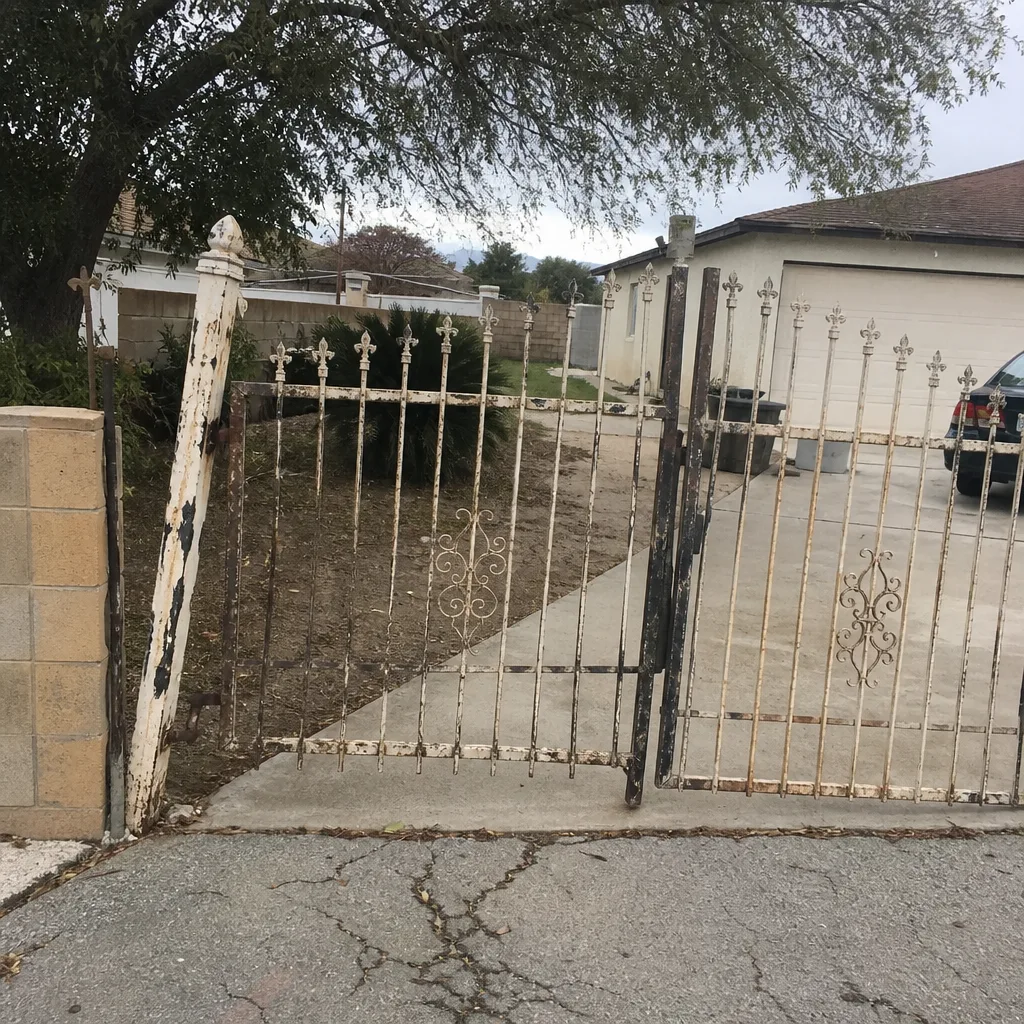
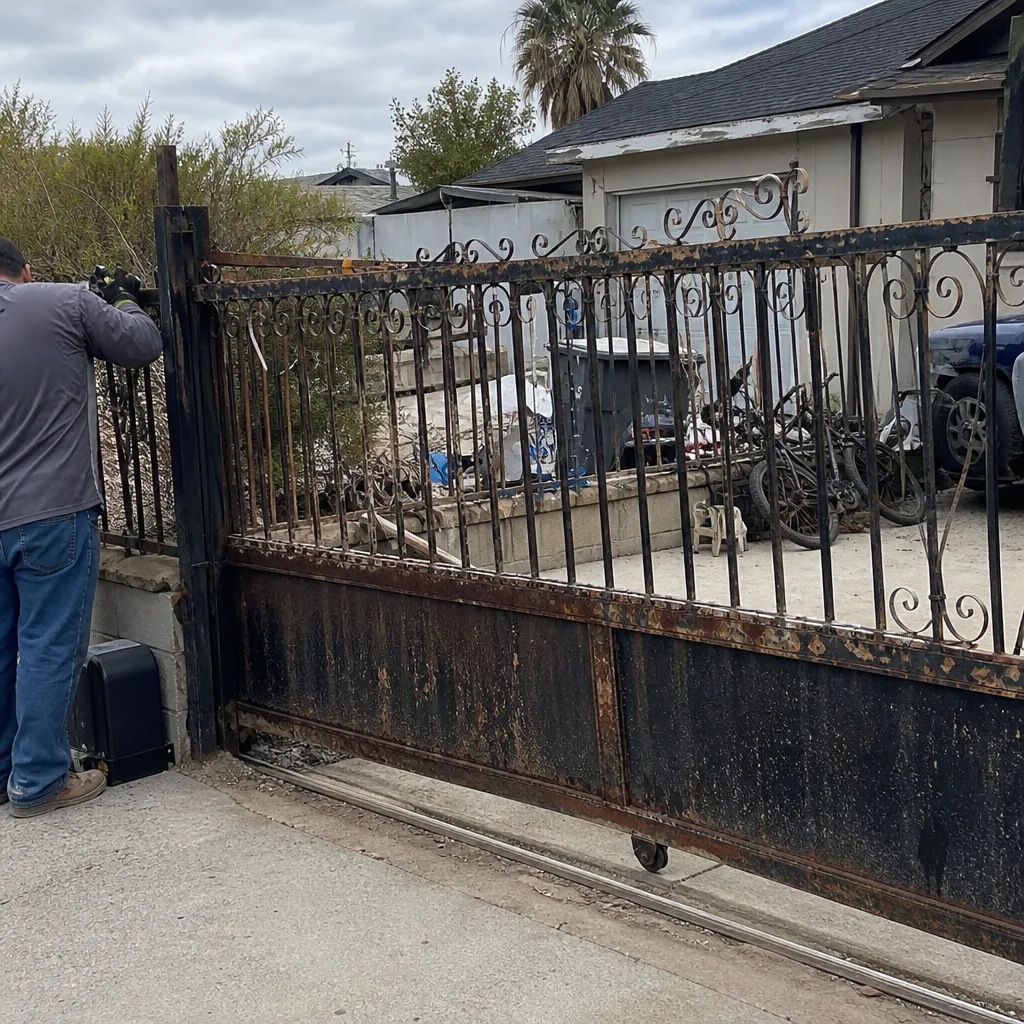 Before
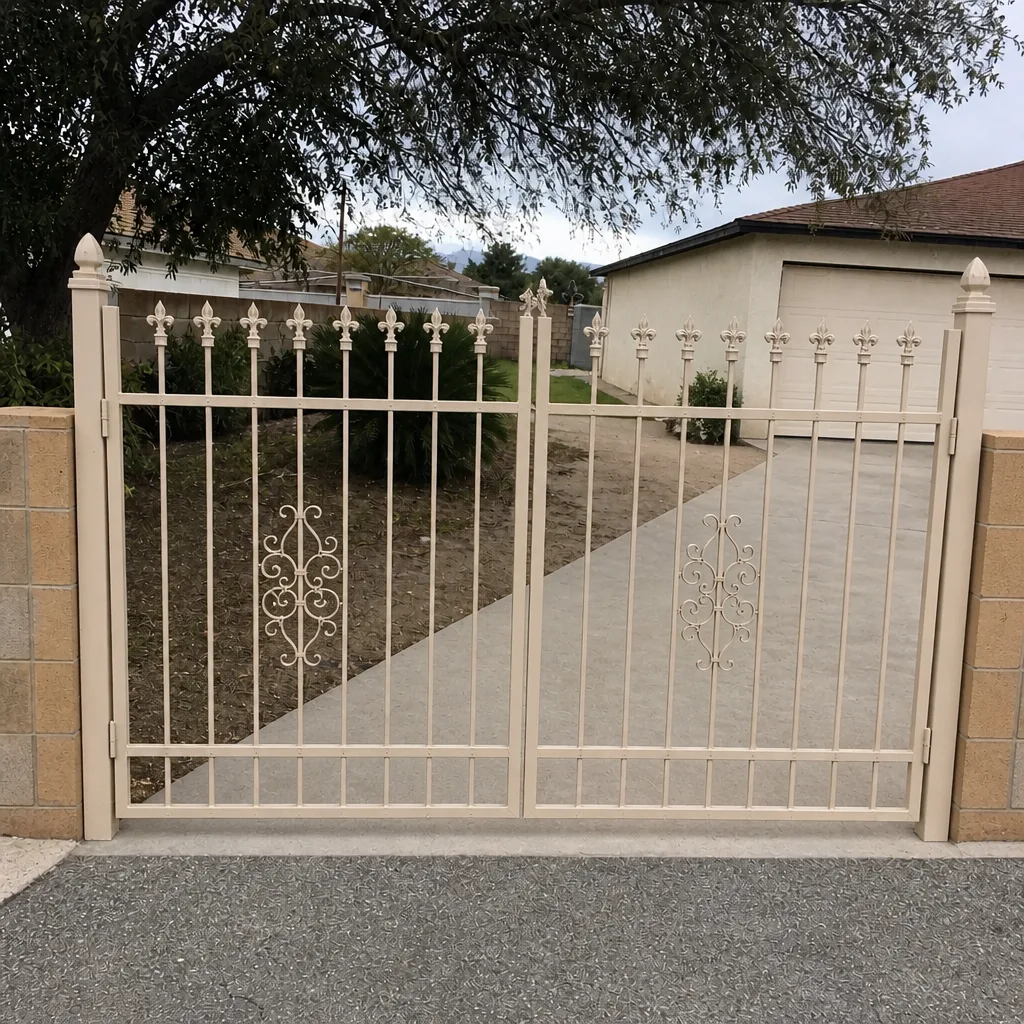
 After
 Before
 After
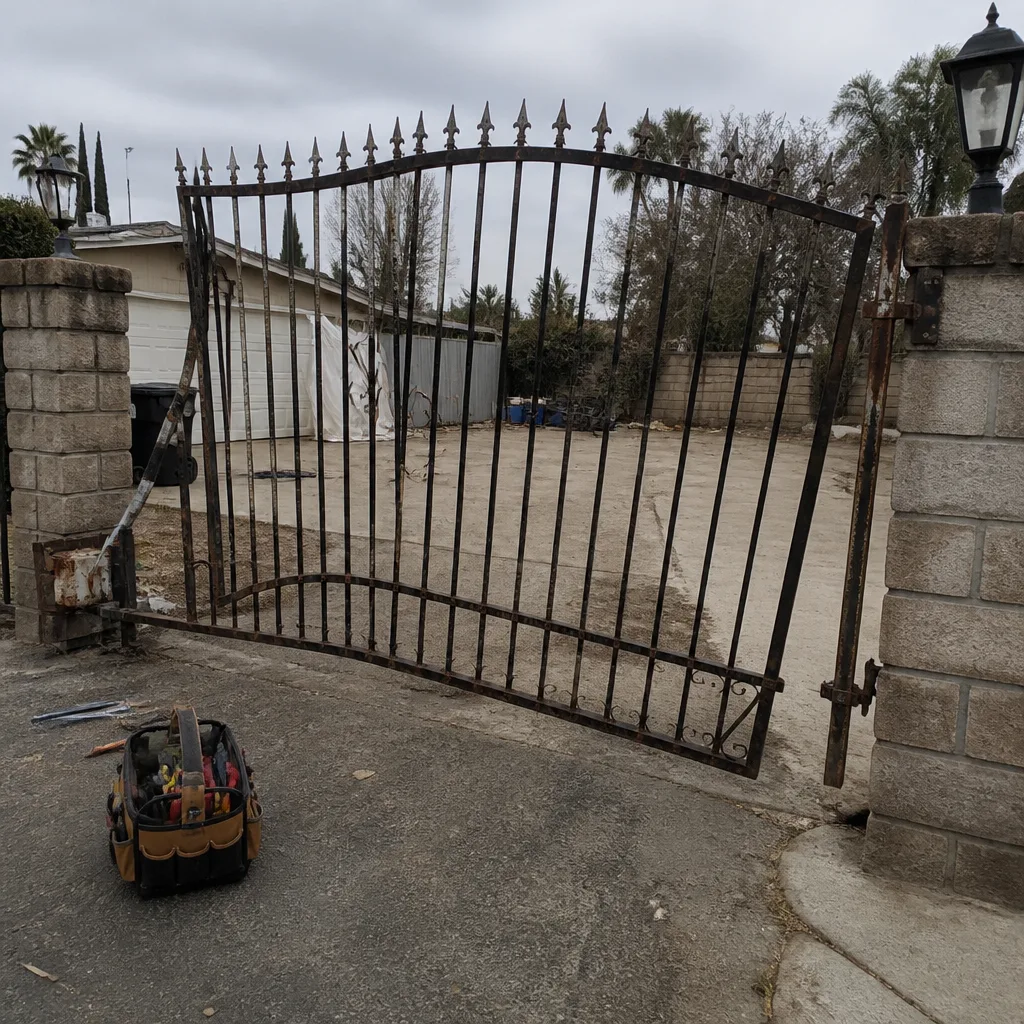 Before
 After