
Last updated November 4, 2026
 Wrought iron
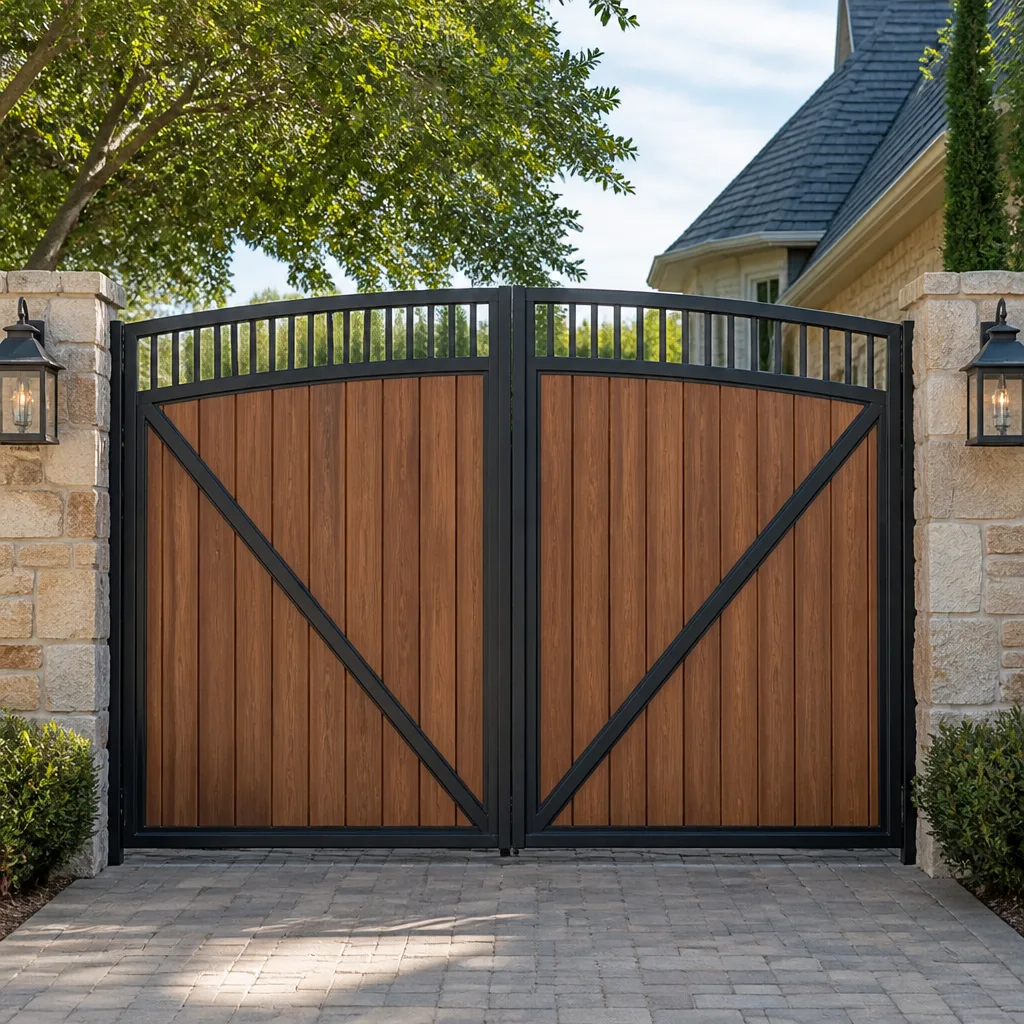 Wood & steel frame
 Farm & ranch
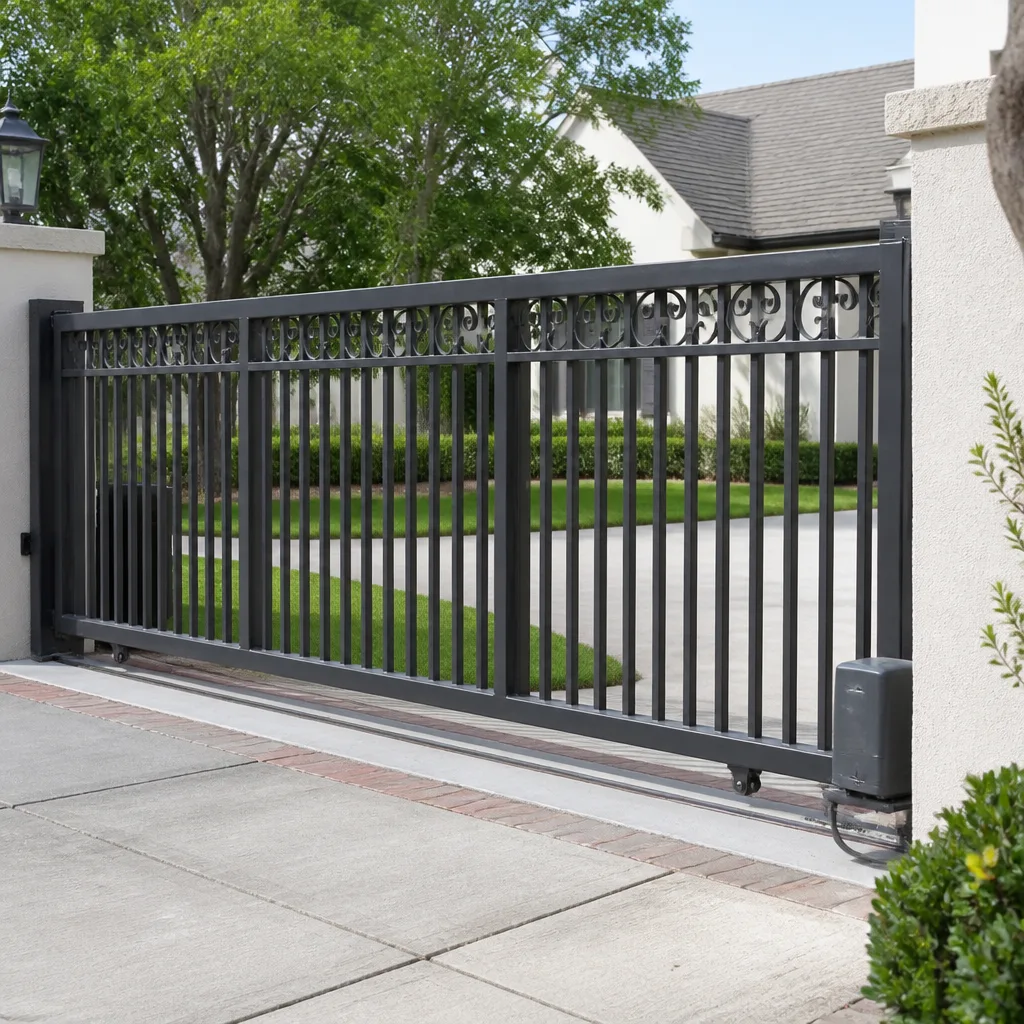 Sliding driveway gates
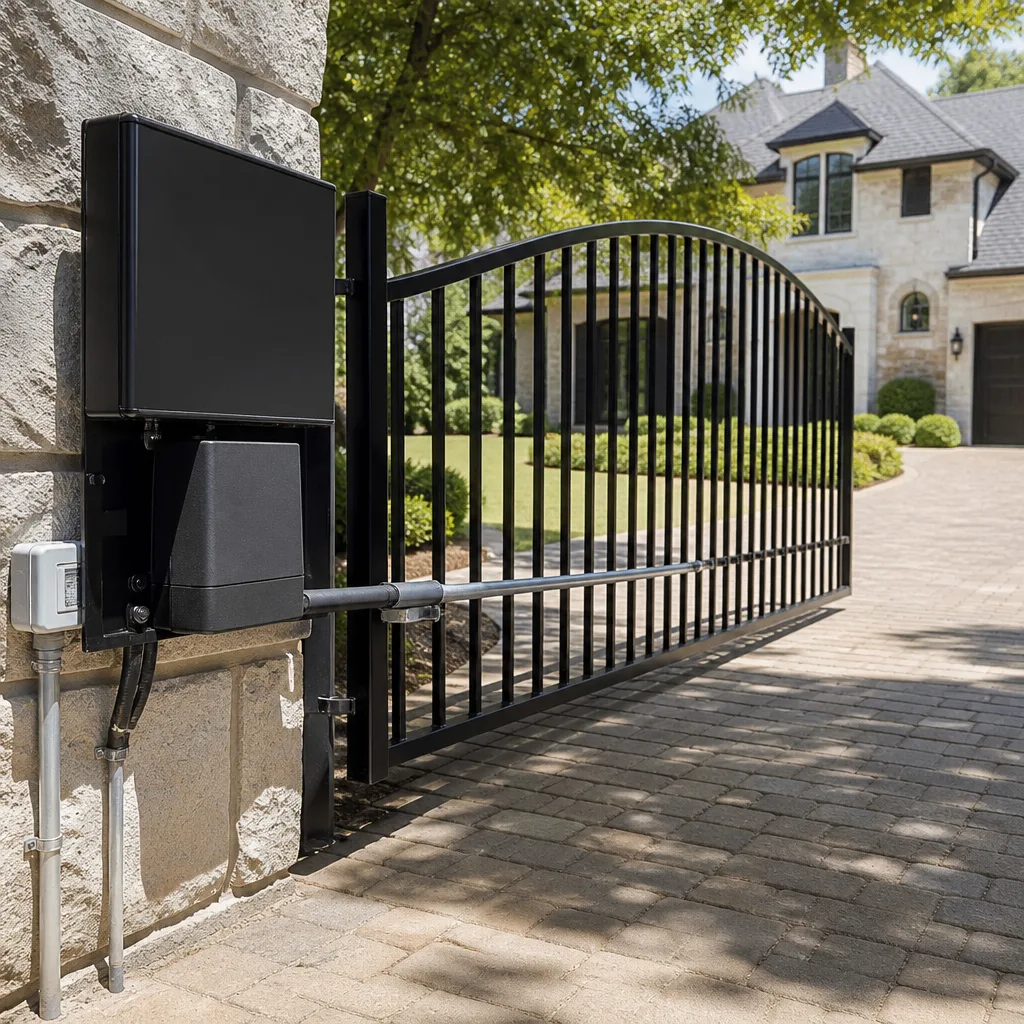 LiftMaster operators
Free on-site gate assessment - hinges, posts, and your LiftMaster or Nice gate operator checked before anything is quoted
The assessment is free and the quote is the invoice.
Get your free estimateGate Repair Troubleshooting in Perris: Common Problems and How to Fix Them
If you’ve pressed the remote twice, checked the breaker, and unplugged the operator for thirty seconds, you’ve done what most troubleshooting guides tell you to do, and your gate still won’t move. That’s because the real diagnostic starts at the gate itself, not the control box. A gate that won’t open, reverses mid-cycle, or grinds against its track is telling you something specific about one of five mechanical or electrical failure points. This guide walks through them in the order a working technician actually checks them, so you can walk into the repair conversation knowing what you’re looking at in Perris.
Quick Answer
Most gate problems in Perris trace back to one of five failure points: the operator power supply, the remote or receiver signal, the limit switches, the mechanical track or hinges, or the control board. Start by testing the wall button or keypad, not the remote, and check for physical obstruction before touching any electrical component. If the gate won’t move at all, the operator isn’t getting power or the board has failed; if it moves partway and reverses, you’re looking at an obstruction, limit switch drift, or a failing safety sensor.
Styles & brands we work with
- Wrought iron
- Wood & steel frame
- Farm & ranch
- Sliding driveway gates
- LiftMaster operators
Table of Contents
- How to Tell an Operator Failure from a Mechanical Obstruction
- Remote Problem or Control Board? How to Isolate the Signal Path
- Gate Starts, Then Reverses: Limit Switches and Safety Sensors
- Why Perris Heat Throws Off Limit Switches and Gate Posts
- What You Can Safely Fix Yourself vs. What Needs a Technician
- Brand-Specific Notes: Viking, Ghost Controls, DoorKing, Elite
- Common Mistakes to Avoid
- When to Call a Professional
How to Tell an Operator Failure from a Mechanical Obstruction
Before you open the operator cover or touch a single wire, put the gate in manual release and try to move it by hand. A swing gate should move through its full arc with steady, even resistance. A slide gate should roll along its track without catching, grinding, or needing a shove. If the gate is heavy, binding, or won’t move smoothly without the motor, you have a mechanical problem, not an electrical one. No amount of control board diagnosis will fix a gate that’s physically stuck.
This physical drag test is the step most guides skip, and it saves real diagnostic time. If the gate moves freely by hand but won’t move under power, the problem sits in the operator, the power supply, or the control logic. If it binds or catches by hand, you’re looking at hinges, track debris, a bent gate panel, or a shifted post. In Perris, where the soil is dry and compacted through most of the year, posts settle unevenly when they settle at all, and a post that’s moved half an inch can make a gate that opens fine in the morning bind by afternoon.
Here’s the elimination sequence we use on site:
- Release the operator and move the gate by hand. Note any binding, scraping, or uneven resistance.
- If the gate moves freely, check the operator light or display for an error code. Many Viking and DoorKing boards flash a specific pattern for obstruction versus power faults.
- If the gate binds by hand, inspect the hinge points or track for debris, rust, or visible misalignment before calling anyone.
- Never force a binding gate with the motor. That’s how limit switches get stripped and gears get chewed.
The distinction matters because the repair paths are completely different. A mechanical obstruction on a slide gate usually means clearing the track, resetting a wheel, or adjusting a post. An operator failure means testing the board, the capacitors, or the motor. Calling out the wrong technician or diagnosing the wrong half of the system wastes a trip.
Remote Problem or Control Board? How to Isolate the Signal Path
The fastest way to isolate whether the problem is in your remote or the gate’s receiver is to bypass the remote entirely. Use the wired wall button or the keypad. If the gate opens with the wall button but not the remote, the operator and receiver are fine, and you’re looking at a remote battery, a damaged remote, or a receiver antenna issue. If the gate won’t open from the wall button either, the problem is downstream of the signal path, usually in the control board, the power supply, or the operator itself.
Power matters here too. Many residential operators, including most gate repair jobs we see with Ghost Controls and Mighty Mule units, run on a transformer that plugs into a standard outlet. Check that the outlet is live before assuming the board is dead. A tripped GFCI can shut down an entire gate system quietly.
Here’s the isolation process in order:
- Press the wall button. Gate opens? Remote or receiver issue. Gate doesn’t open? Move to step two.
- Check the outlet and breaker. Power confirmed? Move to step three.
- Look at the operator’s diagnostic LED. A blinking pattern on a DoorKing or Viking board usually matches a specific fault code in the manual.
- If power is good and the wall button does nothing, the receiver or board is the likely culprit. That’s a technician call.
Remotes fail more often than boards. Start with the battery. Then stand closer. If the remote works at ten feet but not fifty, the receiver antenna may have come loose or the remote may be losing range. If you have the original remote that came with the operator and it still won’t work from close range after a battery change, that points to a receiver or board problem.
Gate Starts, Then Reverses: Limit Switches and Safety Sensors
A gate that starts to open and then reverses before completing its cycle is usually talking to you about one of three things: an obstruction, a limit switch that’s drifted out of position, or a safety sensor that thinks it sees something. The behavior is different for each.
An obstruction is the simplest. A rock in the track, a branch on the gate path, or a misaligned wheel trips the operator’s obstruction detection and sends the gate back. Clear the path and try again. If the gate still reverses, the limit switches or safety edges are the next suspects.
Limit switches tell the operator where the gate should stop. In Perris, where summer heat pushes metal to expand and cool nights let it contract, these switches drift. A gate that worked perfectly in spring may overtravel by an inch in August, trip the safety logic, and reverse. The fix is a limit switch adjustment, which is a technician job on most brands because it involves opening the operator and repositioning the switch cams.
Safety edges and photo eyes are the other common reverse trigger. A dirty photo eye, a misaligned beam, or a damaged safety edge can make the gate reverse every time it starts moving. On slide gates especially, a safety edge that’s pinched or worn will send a false obstruction signal. Clean the photo eye lenses first. If the gate still reverses, you’re likely looking at a sensor replacement or a switch adjustment.
Why Perris Heat Throws Off Limit Switches and Gate Posts
Perris sits in an inland valley where summer days push past 100 degrees and nights drop twenty to thirty degrees. That daily swing does two things to gate systems. Metal expands during the day and contracts at night. Soil dries, shrinks, and settles unevenly after rain cycles. Both of these move gate components by fractions of an inch, and fractions of an inch are all a limit switch or safety sensor needs to misbehave.
A swing gate that scrapes the ground in July but clears it in December is a post settlement problem. The post moved slightly on one side, and the gate now hangs lower at the latch end. A slide gate that reverses at the same point every afternoon is often a limit switch problem, where the metal track has expanded and the operator thinks the gate has reached a position it hasn’t. These are specific, fixable issues, and they’re common enough in Perris that we check limit switches and post alignment before anything else on a mid-cycle reversal.
The heat also shortens the life of operator capacitors. Capacitors sit inside the operator housing, where daytime temperatures in a closed metal box can exceed 140 degrees. When a capacitor fails, the motor may hum without turning, or the operator may start and stop erratically. If your gate groans, hums, or moves slower than it used to in summer, a capacitor may be on its way out.
None of this means you should avoid electric gates in Perris. It means the installation and maintenance details matter. Proper post depth, a shaded operator location, and seasonal limit switch checks all help a gate survive the inland heat. For a deeper look at the systems themselves, read our page on electric gate repair for how these components work together.
What You Can Safely Fix Yourself vs. What Needs a Technician
Some gate problems are safe for a homeowner to address. Others involve live wiring, heavy panels, or high-tension parts that can injure you seriously. The line between them is not always obvious.
Things you can safely do yourself:
- Clear debris from the track or gate path
- Replace a remote battery
- Clean photo eye lenses with a dry cloth
- Check and reset the breaker
- Confirm the outlet powering the operator is live
- Tighten visibly loose hinge bolts that are easy to reach
Things that need a licensed gate technician:
- Any control board replacement or wiring repair
- Limit switch adjustment or replacement
- Motor or capacitor replacement
- Slide gate that has come off its track or is leaning heavily
- Safety edge or photo eye replacement that involves wiring
- A heavy gate panel that’s sagging or binding at a post
The hazard in gate work, especially on slide gates, is weight and stored energy. A slide gate panel can weigh several hundred pounds. If it tips, falls, or shifts while you’re under it, the injury is severe. An operator’s capacitor holds a charge even after the power is off. We’ve opened operators where the capacitor still carried enough voltage to give a real shock. When in doubt, treat the gate as a heavy, powered piece of industrial equipment, not a household fixture.
If you’ve never worked on a gate before and the problem involves opening the operator housing, that’s the point to call someone. Our Gate Repair Perris technicians handle these jobs daily, and the diagnosis is free.
Brand-Specific Notes: Viking, Ghost Controls, DoorKing, Elite
Different gate operators fail in different ways, and knowing the brand you own narrows the diagnosis fast. We work on the brand you already own, and we diagnose by system, not by guesswork.
Viking operators are common on commercial and high-end residential slide gates in Perris. Their boards are robust but sensitive to voltage spikes. A Viking gate that works intermittently is often dealing with a power fluctuation issue or a relay that’s starting to stick. The diagnostic LED patterns on Viking boards are specific, and matching the blink pattern to the manual tells you most of what you need to know.
Ghost Controls makes residential swing gate operators installed by a lot of Perris homeowners. Their two-operator setups depend on synchronization. When one arm moves and the other doesn’t, the problem is usually a wiring connection between the two operators or a slave unit that’s lost communication. The manual release mechanism on Ghost Controls units is accessible, but the wiring runs through the arm itself, and that’s where patience runs thin for a DIY fix.
DoorKing is a commercial-grade brand found on apartment complexes and business properties around Perris. Their slide gate operators are heavy and reliable, but the limit nuts on the drive rail are the first thing to drift. A DoorKing gate that creeps past its normal stop point needs the limit nuts checked and reset. This is a brand where misaligned limits cause most of the reverse-at-close calls we see.
Elite operators are also commercial-grade, and they run into the same heat-related capacitor wear we mentioned earlier. Elite slide operators in the Perris summer can show motor hum without movement, which usually points to a capacitor that’s cooked inside the housing. These are heavy systems with high-torque motors, and the capacitor replacement involves working inside a live power cabinet. That’s a call you want us to make, not one you want to attempt without training.
Common Mistakes to Avoid
- Replacing the remote before checking the wall button. If the wall button works, the remote is the problem. If it doesn’t, a new remote won’t help. This single test saves more false starts than any other step.
- Forcing a gate that’s binding. Pushing a stuck gate with the motor or with a vehicle stresses the gears, the hinges, and the limit switches. If the gate won’t move by hand, stop and diagnose the mechanical problem first.
- Ignoring the outlet and breaker. A surprising number of “dead” operators in Perris are just unplugged, on a tripped GFCI, or on a breaker that flipped during a heat wave. Check power before opening the operator.
- Adjusting limit switches without knowing the brand. Each operator sets limits differently. Viking, DoorKing, Elite, and Ghost Controls all have their own adjustment method. Guessing strips the switch and doubles the repair cost.
- Leaving debris in the track and assuming it’s electrical. A small rock or a bent track guide will make a slide gate reverse every time. Clear the track and test again before anything else.
- Ignoring a gate that’s slowly getting slower. A gate that takes longer to open each month is warning you about a failing capacitor, a tired motor, or binding hinges. Waiting until it stops entirely usually means a bigger repair.
- Working on a slide gate while it’s on the track. A slide gate panel is heavy. If it shifts while you’re inspecting it, it can roll. Prop it, chock it, or leave it alone until a technician arrives.
When to Call a Professional
Call a gate technician when the gate won’t move at all from the wall button and power is confirmed, when it reverses repeatedly after you’ve cleared the track, when the operator hums but doesn’t turn the gate, or when any issue involves wiring, limit switches, capacitors, or a gate panel that’s off its track or leaning. These are the failure points where a homeowner can get hurt or make the problem worse. Gate Repair Perris offers free estimates in Perris, and a diagnosis costs you a phone call. The technician arrives, tests the system front to back, and gives you a written price before any work starts.
Call (866) 569-6762. We answer 24/7. Fast dispatch from 7am to 7pm, Sunday through Friday.
See the difference
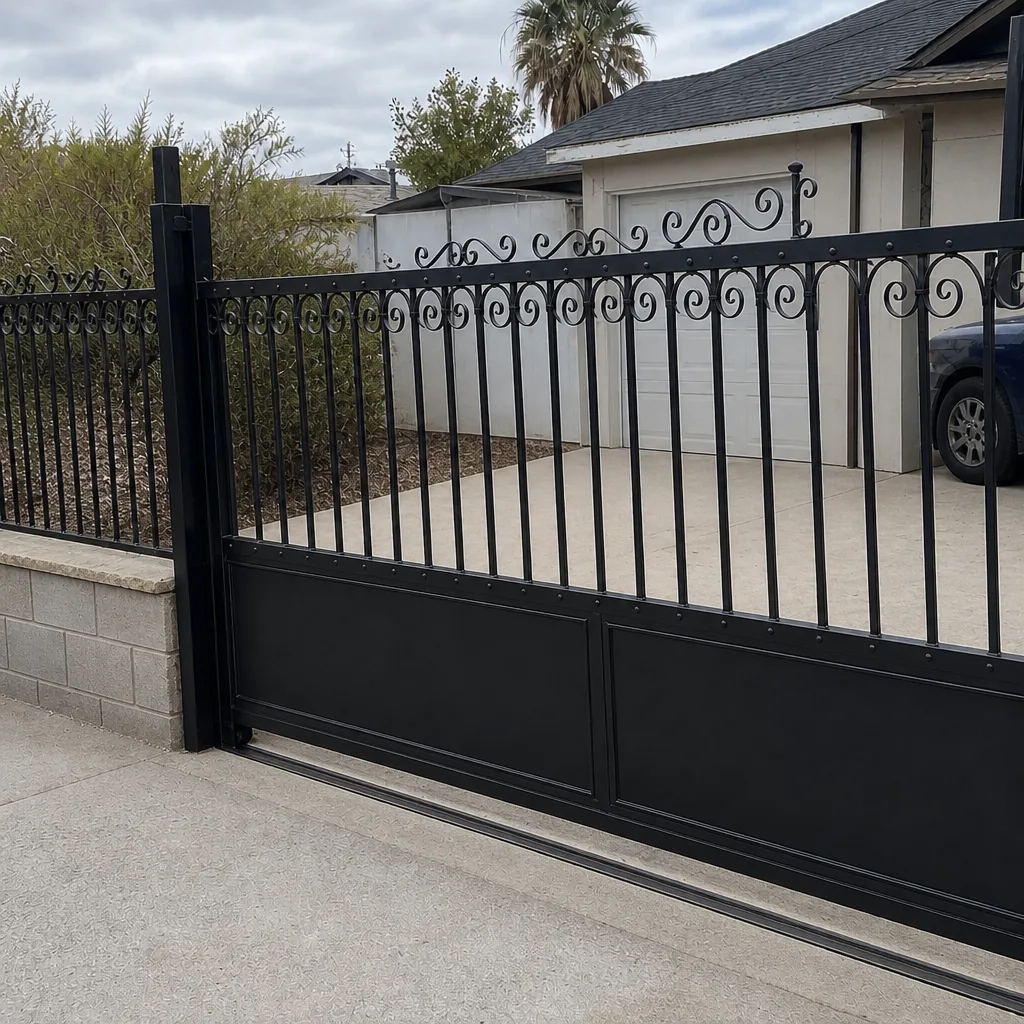
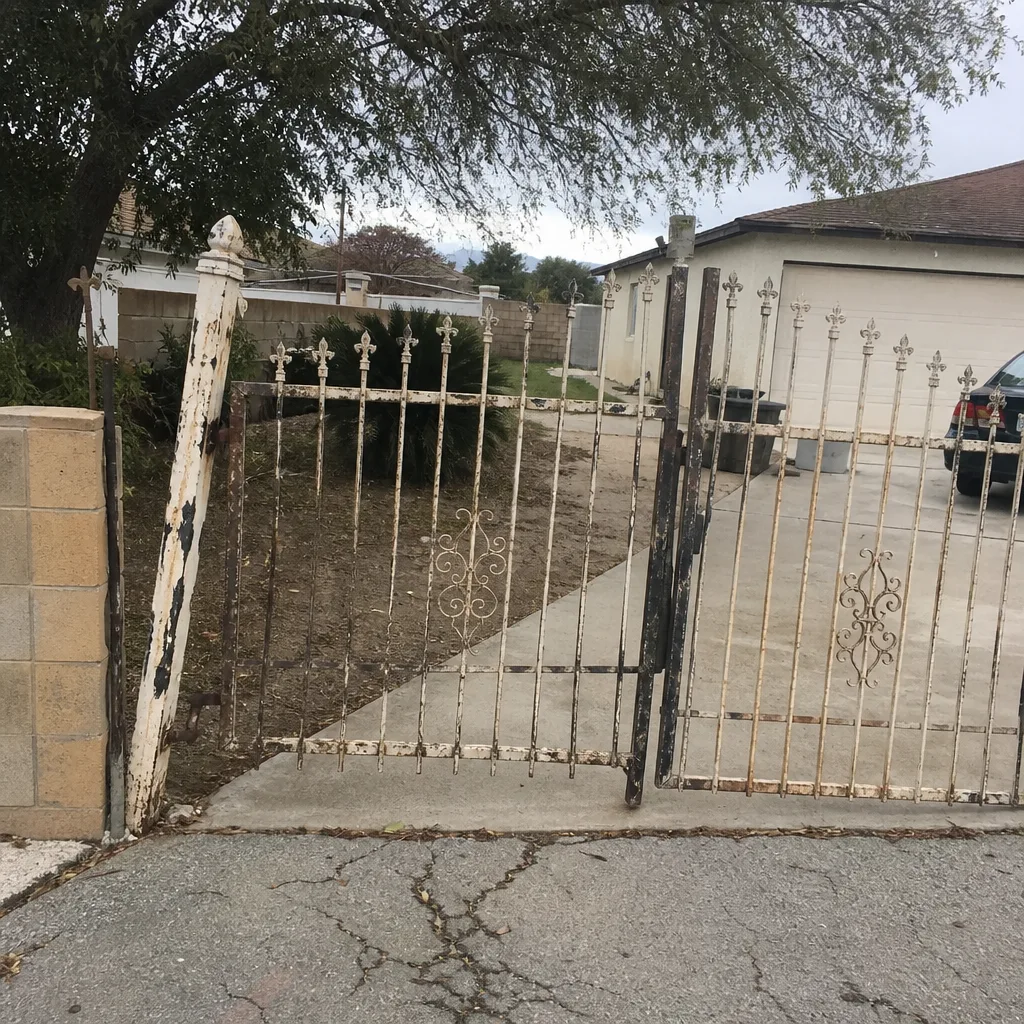
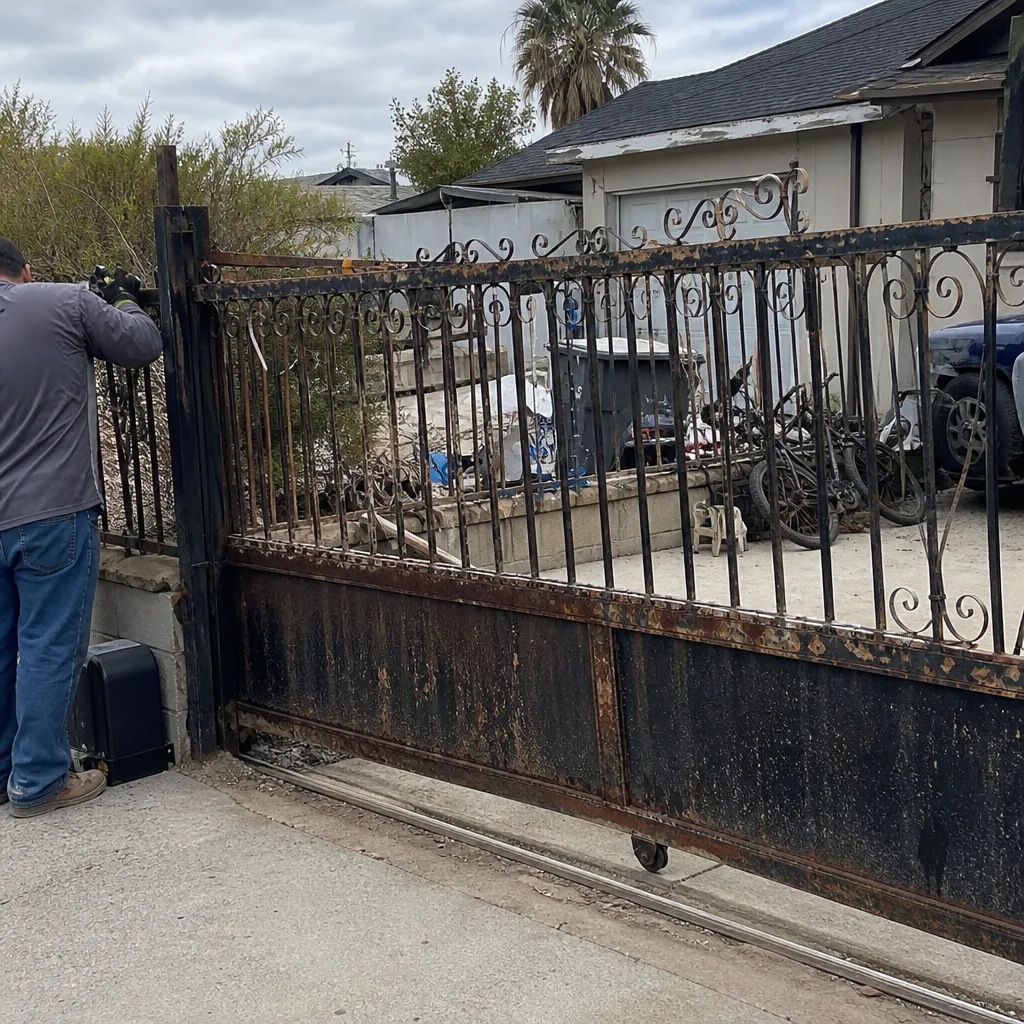 Before
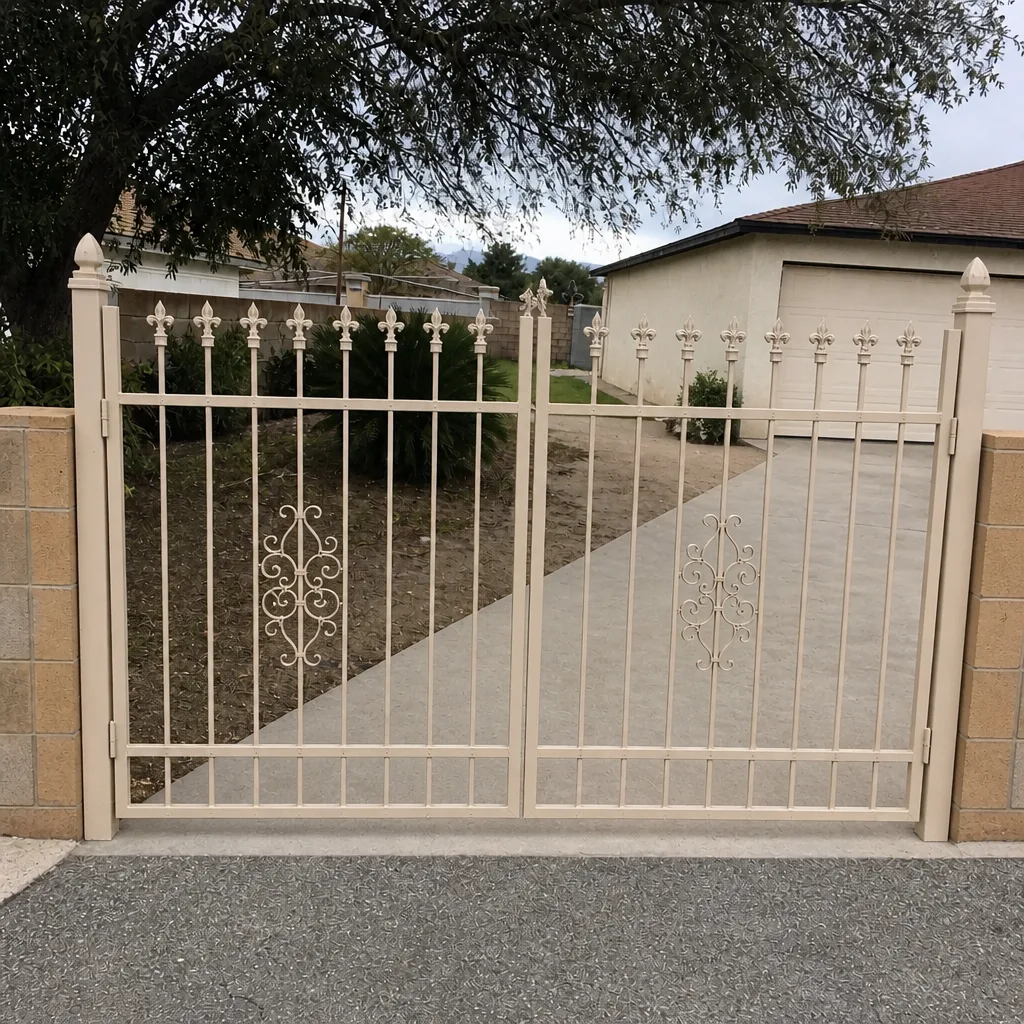
 After
 Before
 After
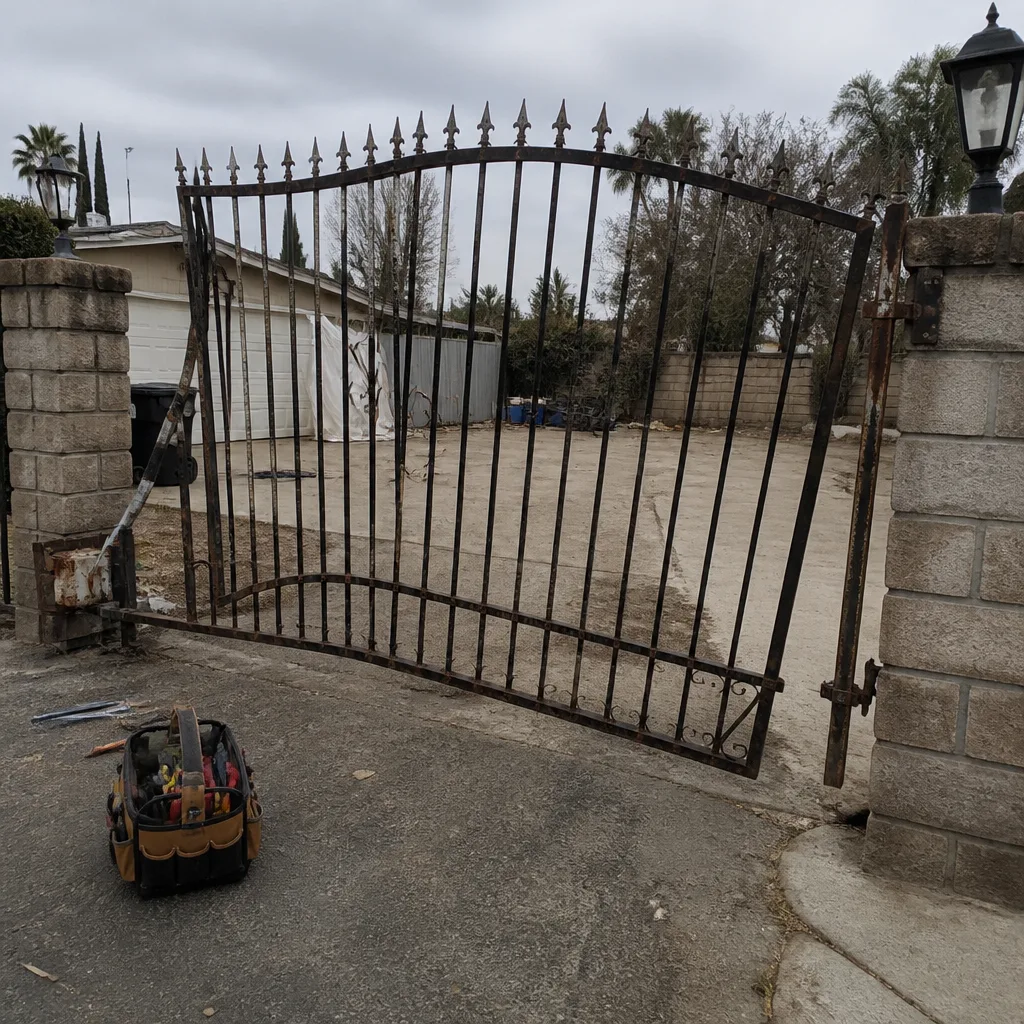 Before
 After
Frequently Asked Questions
That means the operator and receiver are functioning, and the problem sits in the remote itself or the remote’s signal path. Replace the remote battery first, then test from different distances. If a fresh battery doesn’t fix it and the remote only works up close, the receiver antenna may be loose or the remote itself is failing. A new remote programmed to the operator usually solves it.
A gate that reverses mid-cycle is usually hitting an obstruction, a drifted limit switch, or a false signal from a safety sensor. Clear the track and path first. If it still reverses, the limit switch may have drifted from heat expansion, or a safety edge or photo eye is misfiring. These require a technician to adjust or replace.
Gate repair costs in Perris vary by the failure point. A simple photo eye alignment or remote reprogramming sits at the low end, while a control board replacement or motor rebuild costs more. The price is always set per job by a written estimate, and the estimate is free. Call (866) 569-6762 for a specific quote on your gate.
Yes. We answer 24/7 and dispatch technicians from 7am to 7pm, Sunday through Friday, across Perris and the surrounding area. Most residential gate repairs are completed in one visit. Call (866) 569-6762 and we’ll get a technician to your gate as soon as the schedule allows.
Yes. We diagnose by brand, not by guesswork, and we work on Viking, DoorKing, Elite, Ghost Controls, and five more of the most widely installed gate brands. Our technicians know the specific fault codes and failure patterns for each system, so the diagnosis is faster and the repair is aimed at the actual problem.
Some tasks are safe, like clearing track debris, changing a remote battery, or resetting a breaker. Anything involving the operator housing, wiring, limit switches, capacitors, or a heavy gate panel is not a DIY job. A slide gate panel can weigh hundreds of pounds, and an operator capacitor holds charge even when the power is off. When a repair involves opening the operator or moving the gate panel, call a professional.
The Bottom Line
Most gate problems in Perris come down to five failure points, and you can identify which one you’re dealing with before you call a technician. Test the wall button to isolate the remote. Move the gate by hand to find mechanical obstructions. Watch for mid-cycle reversals that point to limit switches or safety sensors. Remember that Perris heat shifts posts and drifts switches more than most climates, and never open an operator housing unless you know how to handle stored voltage. If you’ve worked through these steps and the gate still won’t behave, call us for a free estimate. We answer 24/7 and dispatch Sunday through Friday, 7am to 7pm. We work on the brand you already own, from a bent hinge to a failed control board, and we’ll give you a written price before any work begins.
Written by the team at Gate Repair Perris, serving Perris since 2012.