
Last updated November 4, 2026
 Wrought iron
 Wood & steel frame
 Farm & ranch
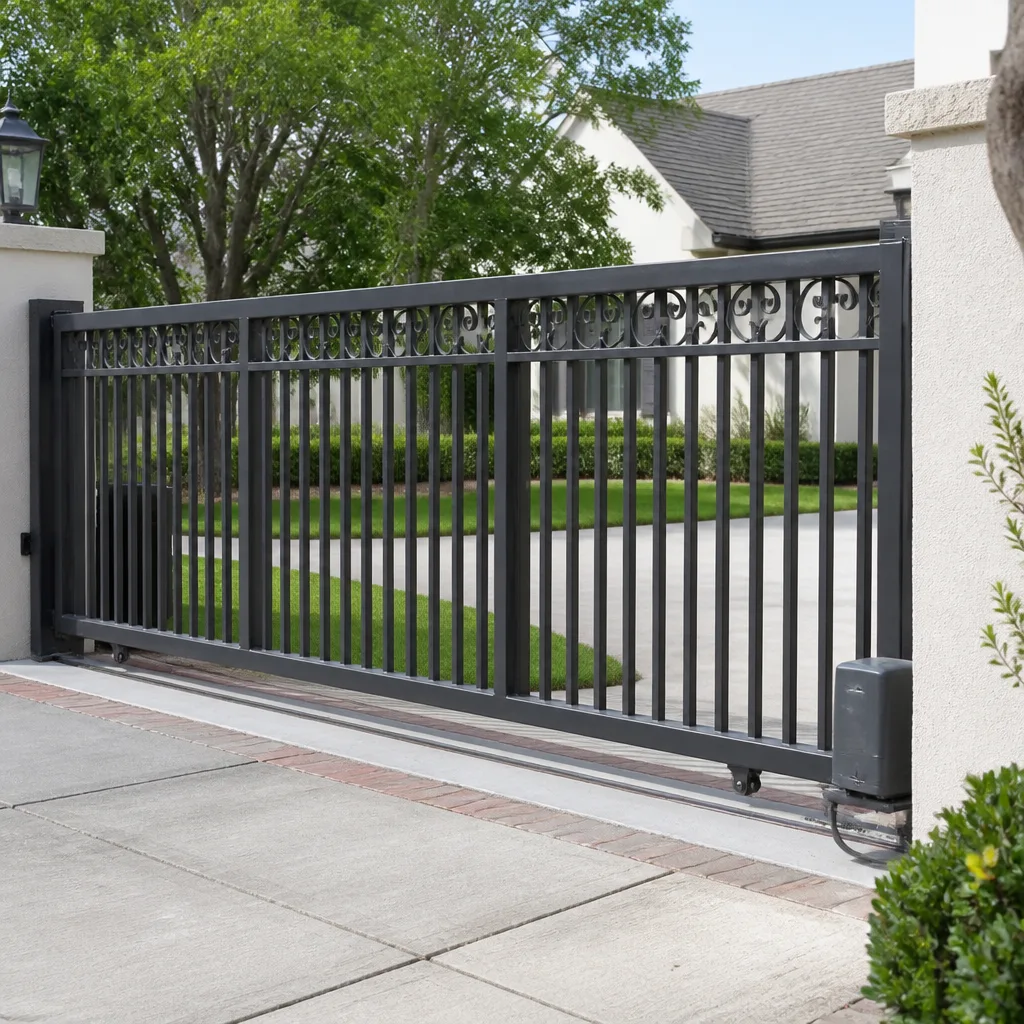 Sliding driveway gates
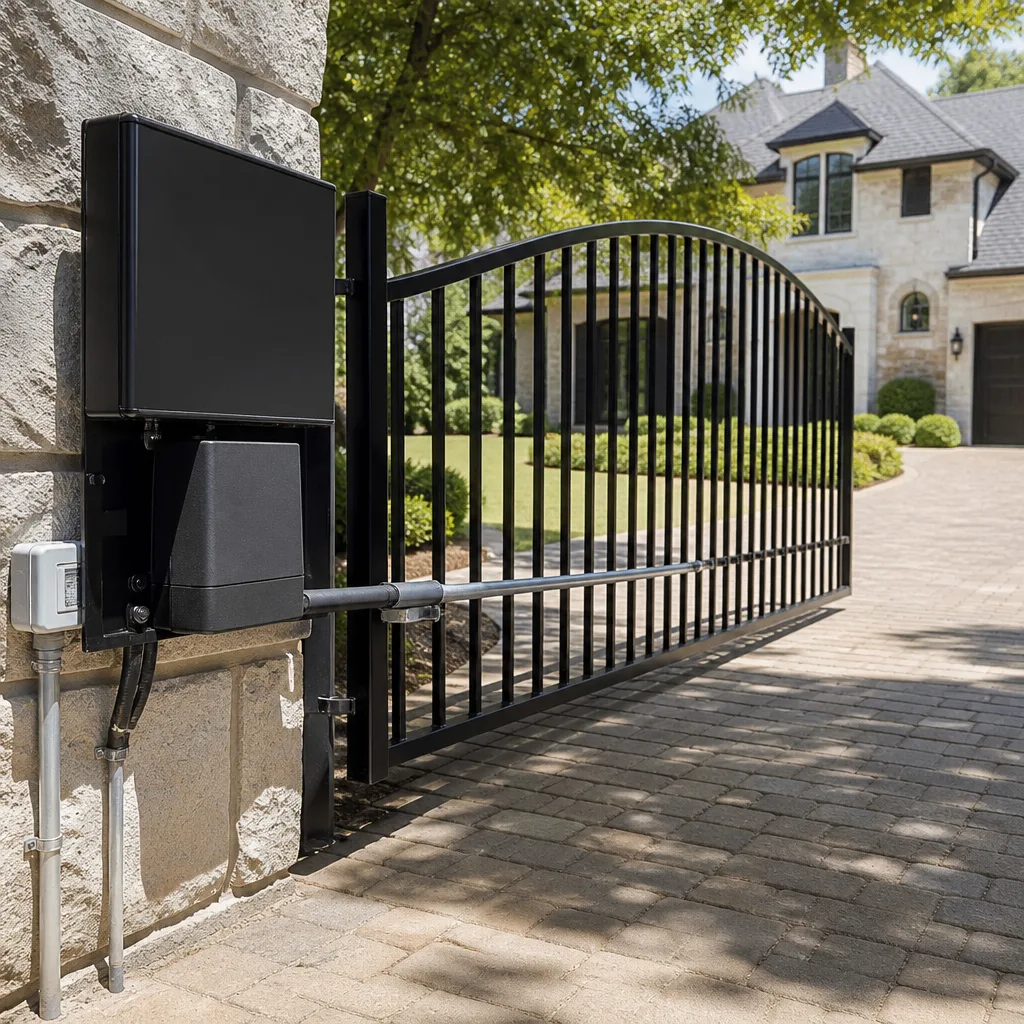 LiftMaster operators
Free on-site gate assessment - hinges, posts, and your LiftMaster or Nice gate operator checked before anything is quoted
The assessment is free and the quote is the invoice.
Get your free estimateGate Repair Maintenance Checklist for Perris Homeowners
Most gate maintenance advice tells you to lubricate moving parts and walk away. Around here, that advice can actually make things worse. The heat and dust in Perris turn standard petroleum grease into a sticky paste that grabs grit and holds it against hinge pins and roller bearings until they grind themselves down. A gate that gets the wrong care in this climate fails faster than one that gets none at all. This guide is built around what actually breaks on Perris gates, in what order, and what to do about it before you’re standing in your driveway with a gate that won’t open.
Quick Answer
A Perris gate maintenance routine should center on three things: using dry or synthetic lubricants that don’t attract dust, clearing grit from tracks and rollers every month, and checking limit switches and safety sensors at least quarterly. The climate here punishes neglect faster than most places because heat, UV exposure, and airborne dust work together to wear out hinges, operators, and control boards. Most of the checks below take under fifteen minutes and don’t require special tools.
Styles & brands we work with
- Wrought iron
- Wood & steel frame
- Farm & ranch
- Sliding driveway gates
- LiftMaster operators
Table of Contents
- Monthly Checks: Track, Rollers, and Lubrication
- Quarterly Checks: Limit Switches, Photo Eyes, and Safety Loops
- Annual Checks: Hinges, Welds, Posts, and Structural Alignment
- Lubrication Guide for Inland Empire Heat
- Checklist by Gate Type: Sliding vs. Swing, Manual vs. Automated
- Thermal Expansion and Dust: The Two Perris Killers
- What You Can Do Yourself vs. What Needs a Technician
Monthly Checks: Track, Rollers, and Lubrication
Monthly maintenance is about removing what the wind puts there. Perris sits in a valley that collects airborne dust, especially during dry months when the ground is bare and the Santa Ana winds push through the passes. That dust settles into gate tracks, coats rollers, and works its way into hinge pins. A monthly pass keeps grit from becoming grinding paste.
For a sliding gate, run through these steps:
- Clear the track of pebbles, leaves, and caked dirt with a stiff brush. Don’t hose it out unless you plan to dry it; standing water in a track accelerates rust on the wheels and the lower frame.
- Wipe the track wheels with a rag. Check for flat spots or wobble. A wheel that’s lost its round shape starts dragging the gate and loading the motor harder than it should.
- Check the chain or belt for slack. If it droops more than about half an inch between pulleys, call a gate technician for a tension adjustment rather than tightening it yourself.
- Look at the gate’s path. Weeds, gravel, and wind-blown debris build up along the bottom rail. Trim anything that touches the gate as it moves.
- Inspect the receiver and transmitter on the operator. Dust coats the wiring terminals over time. A dry cloth wipe is usually enough.
For a swing gate, the monthly list is shorter but no less important. Check hinge pins for visible grit. Wipe them clean with a rag. Inspect the ground where the gate swings. If the gate has begun to scrape the driveway or bind against a latch post, that’s a sign of hinge wear or a post starting to lean. Swing gates are simple until they’re not. The load path runs entirely through the hinge and the post, so any change in the gate’s swing pattern is worth noting early.
Quarterly Checks: Limit Switches, Photo Eyes, and Safety Loops
Every three months, test the parts that tell an automated gate where to stop and whether anything is in the way. These checks matter most on electric systems, but even a manual gate with a magnetic lock benefits from confirming the hardware still functions.
Limit switches control how far the gate travels before the operator cuts power. When they drift out of adjustment, the gate either stops short or slams into the end post. You don’t need a meter to test them:
- Run the gate one full open and close cycle. Listen for a hard stop. A soft stop from the operator is good. A bang against the end post is not.
- Watch the gate at the last few inches of travel. If it changes speed noticeably before stopping, the limit switch is working. If it runs at full speed into the stop, the switch needs recalibration.
- Test the photo eyes. With the gate open, block the beam with your hand or a piece of cardboard and attempt to close the gate. It should stop or reverse. If it doesn’t, clean the lenses and test again. Dust on the lenses is the most common reason photo eyes fail in Perris.
- For gates with safety loops in the driveway, walk slowly across the loop area while the gate is closing. If the gate does not stop or reverse, note it. Loop detectors can drift over time and need re-tuning.
These tests are quick, but they catch the failures that turn into a gate that crushes a car bumper or traps a delivery driver. If any test fails and you’re unsure why, an electric gate repair call is cheaper than waiting for the damage.
Annual Checks: Hinges, Welds, Posts, and Structural Alignment
Once a year, look at the gate as a structure rather than a machine. Heat and wind do slow, patient damage that you won’t notice day to day. A post leaning two degrees is invisible until the gate starts dragging or the latch won’t line up. Walk the gate with a critical eye and check the following.
Hinge fatigue. Swing gates hang their entire weight on two or three hinges. Over years of Perris heat, the metal never gets a rest. Weld cracks often start at the hinge barrels or where the hinge plate meets the gate frame. Look for hairline cracks, rust lines radiating from a weld, or paint that’s flaking in a straight line. Any of these means the metal has started to move and split the coating.
Post lean. Sight down the gate post like a rifle barrel. If it’s out of plumb by more than a degree or two, the concrete footing has shifted or the post has bent. A leaning post changes the geometry of the hinge and accelerates wear. It also forces the latch out of alignment.
Weld cracks. Inspect every structural weld on the gate frame and the operator mount. Look for a dark line running through the weld bead, rust bleeding from the edges of the bead, or paint that has cracked in a spiderweb pattern. These are early signs. A welder can repair a crack before the joint fails completely. A failed joint means the gate drops or the operator tears itself off the mount.
Track alignment on sliding gates. A sliding gate should roll without lifting, shaking, or grinding. If a section of track has settled or moved, the gate will find it every time. Run the gate slowly and watch for a consistent hitch at the same spot. That’s a track problem.
Control board corrosion. Open the operator cover and look for white or green fuzzy growth on the circuit board. Perris doesn’t have salt air, but dust combined with humidity and the temperature swings between day and night creates its own microclimate inside the housing. Corrosion on a board’s traces causes phantom faults that come and go. We see it most on LiftMaster and Mighty Mule boards that have been mounted for several years without being opened.
Lubrication Guide for Inland Empire Heat
This is the section where most generic checklists get it wrong. What works on a gate in a cool coastal climate turns to sludge here. Standard petroleum grease separates in sustained heat. The oil bleeds out of the thickener, leaving a wax-like residue that holds dust. Within weeks, your lubricated hinge is grinding with a paste that wears the pin faster than no lubricant at all.
In Perris, use these:
- Dry PTFE or silicone spray for hinge pins and latch mechanisms. It dries to a film that repels dust and doesn’t attract grit. Reapply every month or two during the dusty season.
- Synthetic grease rated for high temperature on roller bearings and track wheels. Look for a rating of at least 300°F on the container. Synthetic greases maintain their structure better than petroleum grease when daytime temperatures sit above 100°F.
- Dry graphite for lock cylinders. Wet graphite pastes attract dust. A quick puff is enough.
- Never use WD-40 as a lubricant. It’s a water displacer and solvent. It strips the lubricant that’s already there and leaves behind a residue that hardens in heat.
The rule is simple: if it’s wet enough to drip, it’s wet enough to collect dirt. In this climate, less is more. A clean, dry hinge with a dry film lubricant outperforms a hinge packed with the wrong grease.
Checklist by Gate Type: Sliding vs. Swing, Manual vs. Automated
Different gates fail in different ways. A checklist that doesn’t separate gate types wastes your time. The checks below are organized by what you own.
Manual slide gate
- Monthly: clear track, wipe wheels, check for wobble
- Quarterly: inspect track bolts, check the cantilever rollers if it’s a cantilever design
- Annually: check welds on the frame, verify track bolts are torqued, inspect the gate stop
Automated slide gate
- Monthly: everything on the manual list, plus check the chain or belt tension
- Quarterly: test limit switches, clean photo eye lenses, clean dust from the operator housing vents
- Annually: check the operator mount bolts, inspect the control board for corrosion, test safety loops
Manual swing gate
- Monthly: wipe hinge pins, check for sag or scrape marks on the ground
- Quarterly: apply dry PTFE to hinge pins and latch, check hinge bolts for loosening
- Annually: inspect hinge welds and post plumb, check for cracks in the gate frame
Automated swing gate
- Monthly: everything on the manual list, plus run one full cycle and listen for changes in motor pitch
- Quarterly: test the operator’s obstruction detection, check the arm or piston for leaks or scoring
- Annually: inspect the operator mount, check the control board for dust and corrosion, verify the close and open limits
Gate with magnetic or electric lock
- Monthly: verify the lock engages fully when the gate closes
- Quarterly: clean the strike plate and the lock face, check the wire run for cracking insulation
- Annually: test the release function, inspect the power supply for heat damage
Brand matters for diagnostic specifics. A Ghost Controls or Mighty Mule residential operator shares a basic design but has different failure modes than a commercial FAAC or Elite unit. We work on the brand you already own, which means we don’t spend the first service call learning how your operator is supposed to behave. If you have questions about a specific symptom on your system, a gate repair consultation is the quickest way to get an answer.
Thermal Expansion and Dust: The Two Perris Killers
Most gate hardware fails in Perris for one of two reasons: the metal expands and contracts every day, or dust gets inside something that should stay clean. Both are slow, and both create failures that look sudden when they finally happen.
Thermal expansion works like this. A steel gate that’s 20 feet long grows by a measurable amount when the sun hits it in a 105°F afternoon and shrinks again at night when the temperature drops into the 60s. Every day, the gate does this. Over months and years, the repeated movement stresses welds at the frame corners and hinge plates. It loosens bolts. It shifts tracks. The gate you installed five years ago is not in the same position today, even if it still works.
Dust is the second killer. Perris sits in a basin where the wind carries fine particulate from dry lake beds, construction sites, and open fields. The dust is fine enough to get past gaskets and into operator housings. It coats circuit boards. It accumulates in the photo eye lenses. It works into the contactor points. Over time, the dust builds until a component overheats or a connection fails. Then the gate stops for no apparent reason.
The maintenance routine above is built around these two facts. Clear dust before it accumulates. Check alignment before expansion becomes permanent. Lubricate with products that don’t make the dust problem worse. Do those three things and you’ve addressed the most common causes of gate failure in the Perris area.
What You Can Do Yourself vs. What Needs a Technician
A motivated homeowner can do most of the checks on this list. The monthly cleaning, the quarterly photo eye test, the annual visual inspection of welds and posts. Those are within reach for anyone who owns a brush, a rag, and fifteen minutes.
What needs a technician is anything involving the operator’s wiring, the control board, or the motor. Electric gate operators run on line voltage in most installations. A wrong connection or a component replaced incorrectly doesn’t just fail the test. It can damage the board, the motor, or the person doing the work. We cover Gate Repair Perris calls where the problem is electrical, and we treat the wiring with the same respect as any other high-voltage system. If the gate is tripping a breaker, the operator is humming without moving, or the control board is showing error codes you don’t understand, call rather than probe around.
Structural repairs are another thing to leave to someone with the right equipment. A gate panel that’s 16 feet long can weigh several hundred pounds. Welding a crack while the gate is under tension, or unbolting a hinge without supporting the panel, is how people get hurt. A bent hinge is one thing. A cracked weld on a loaded frame is another. From a bent hinge to a failed control board, we diagnose by system. If you’re not sure which category your problem falls into, a phone call costs nothing and gives you a straight answer.
Common Mistakes to Avoid
- Using petroleum grease on anything. It breaks down in heat, bleeds oil, and holds dust. You’re lubricating and sanding the same component at the same time.
- Ignoring a gate that’s started slowing down. Slower movement means more load on the motor, which means more heat, which means a shorter life. A slowing gate is a symptom, not a personality trait.
- Cleaning tracks with a pressure washer. The blast drives grit deeper into bearings and seals and pushes water into places it shouldn’t go. A stiff brush and a rag do the job better.
- Hosing down the operator housing. Dust inside an operator is bad, but water inside is worse. If you must clean the housing, use compressed air or a dry cloth.
- Tightening the chain without knowing the spec. Over-tightening puts side load on the motor shaft and the idler bearings. A chain that’s slightly loose is better than one that’s fighting the bearings.
- Waiting until the gate fails to call someone. The cheapest repair is always the one done before the failure cascades. A $200 hinge repair becomes a $2,500 gate replacement when the panel drops and tears the operator off its mount.
See the difference
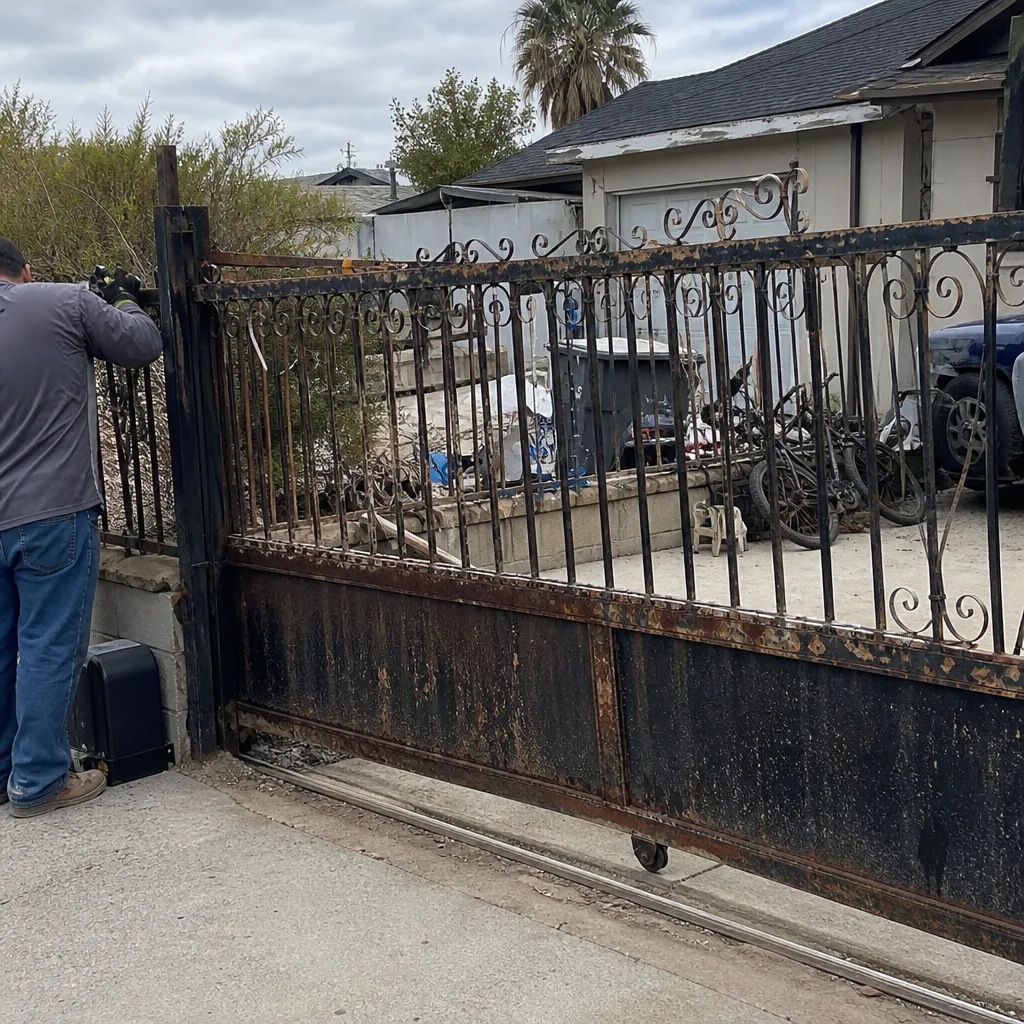 Before
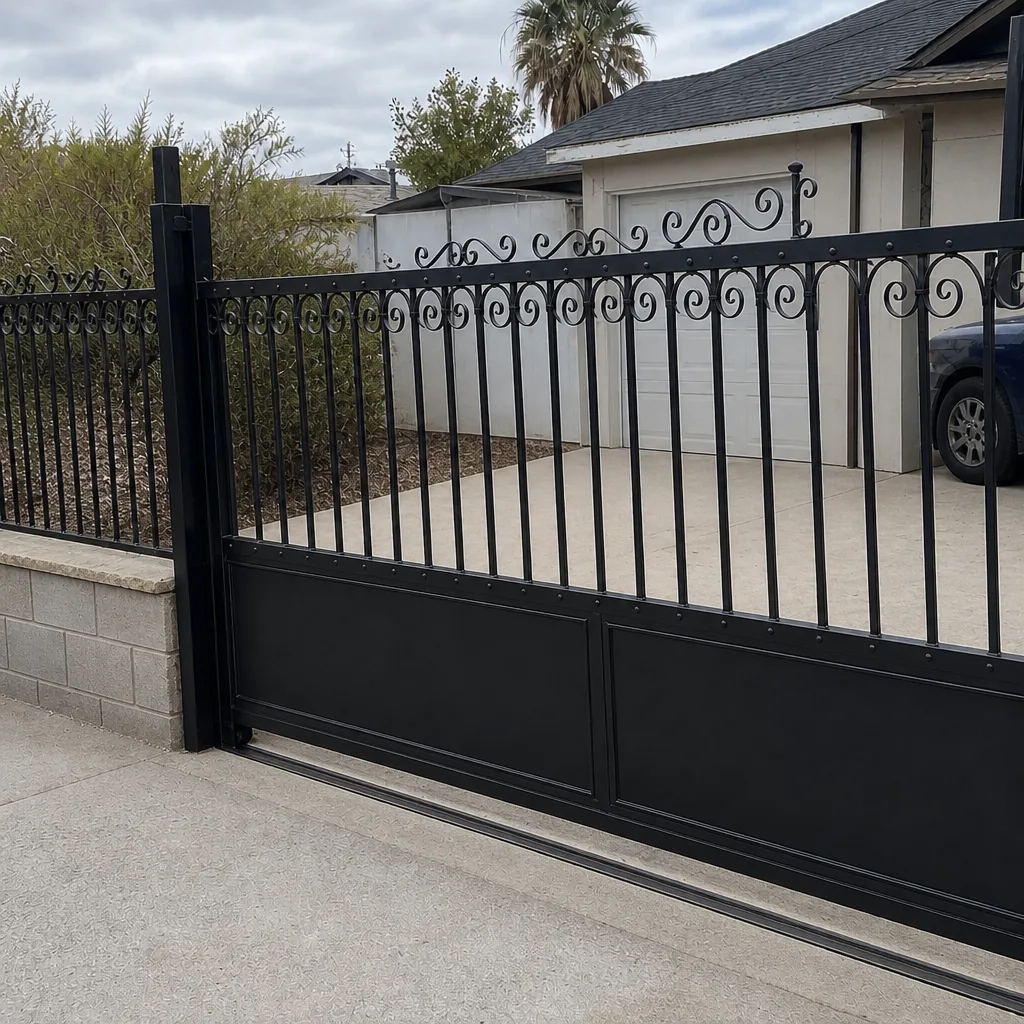 After
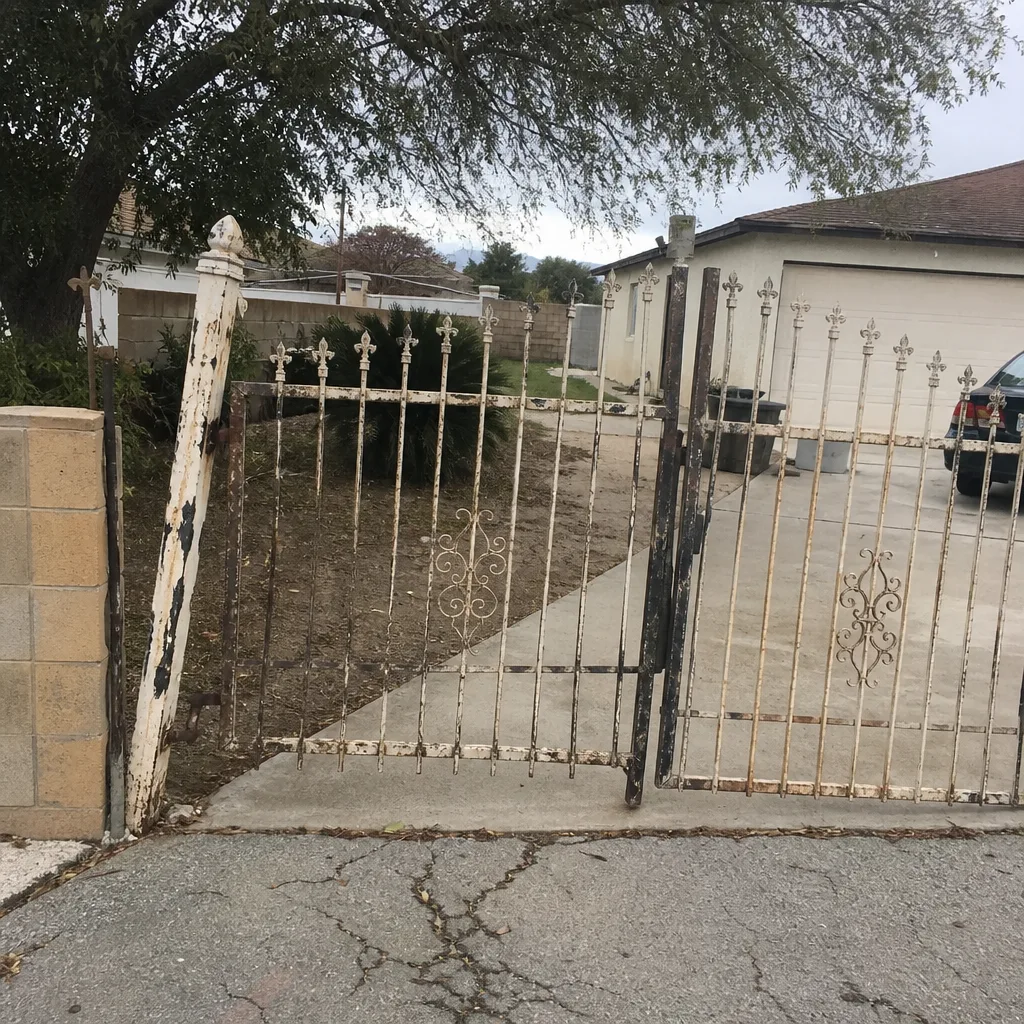 Before
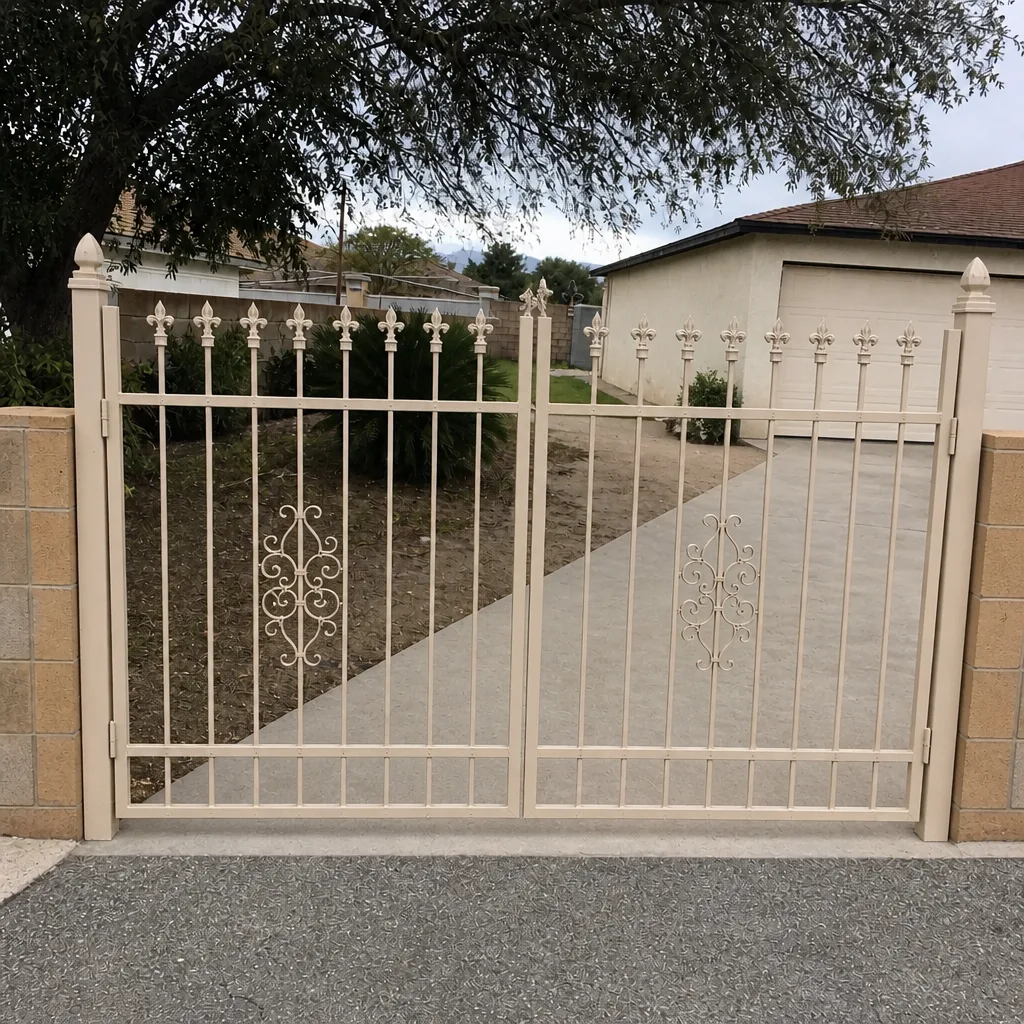 After
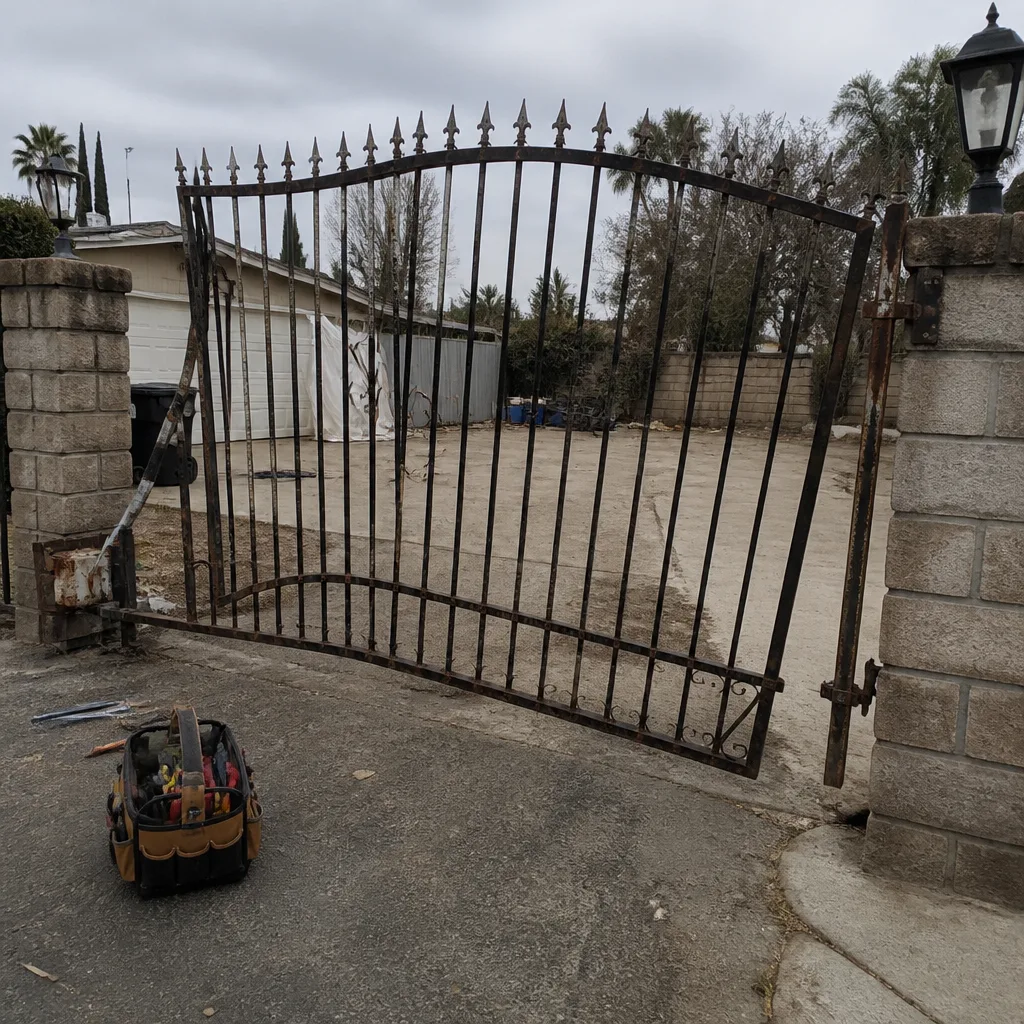 Before
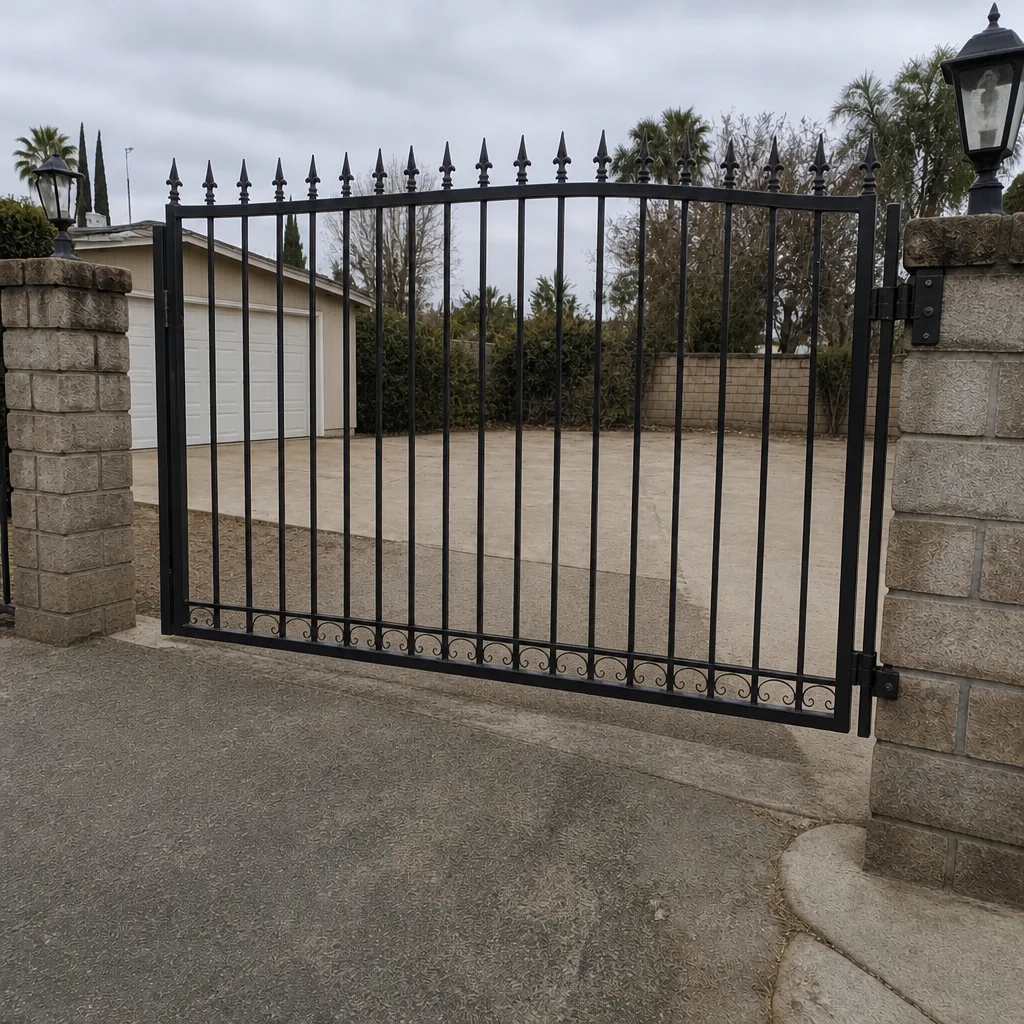 After
When to Call a Professional
Call when the gate trips its breaker more than once. Call when the operator hums but the gate doesn’t move. Call when a post is visibly leaning, when a weld crack is longer than an inch, or when the gate has begun to hit the end post hard enough to rattle the fence. Call when the photo eyes pass your test but the gate still reverses for no reason, because that points to a control board problem you can’t see from the outside. Gate Repair Perris offers free estimates in Perris. Call (866) 569-6762 and describe what the gate is doing. Most problems can be identified over the phone in a few minutes, and the estimate is free.
Frequently Asked Questions
Every two months during the windy, dusty season, and every three months the rest of the year. Use a dry PTFE or silicone spray on hinge pins and a high-temperature synthetic grease on rollers. Never use petroleum grease in this climate.
Dust accumulation on photo eyes and in operator housings, followed by limit switch drift, are the two most common issues we see on automated gates. Both are preventable with the quarterly checks in this guide.
You can do the monthly and quarterly checks yourself. Most homeowners can handle track cleaning, photo eye tests, and lubrication without help. Structural inspections and electrical work are where a professional makes sense.
Thermal expansion. The metal grows in the afternoon heat and the gate changes shape slightly. If the hinges or track were aligned in cooler weather, the summer expansion can push the gate out of alignment enough to scrape. This is normal for steel gates in the Inland Empire, and it’s worth checking alignment before every summer.
If you do the monthly and quarterly checks yourself, the cost is a bottle of lubricant and your time. If you want a professional inspection and adjustment, expect a service call that covers a full check of the operator, hinges, track, and safety systems. Call (866) 569-6762 for a free estimate. The price is quoted before any work starts.
We work on the brand you already own. That includes LiftMaster, FAAC, BFT, Linear, Viking, Ghost Controls, DoorKing, Elite, and Mighty Mule. Electric or manual, we diagnose by system, not by guesswork.
The Bottom Line
A gate in Perris doesn’t need daily attention. It needs the right attention at the right interval, with the right products. Clean the dust off the moving parts every month. Test the safety systems every quarter. Walk the structure every year and look for the slow failures that heat and expansion leave behind. Use lubricants that don’t become grit magnets. And when something looks wrong, don’t wait until the gate is blocking your driveway and the motor is burning out. A small call now beats a big repair later. Call (866) 569-6762. We answer 24/7. Fast dispatch from 7am to 7pm, Sunday through Friday.
Written by the team at Gate Repair Perris, serving Perris since 2012.